
For many students, the school dance is the highlight of the year. The lights, the music, the hanging out with friends—it’s a rite of passage.
But for students with autism, ADHD, or sensory processing disorders, a traditional school dance can be a nightmare.
The booming bass that rattles the bleachers, the screaming crowds, and the chaotic noise levels can quickly lead to sensory overload. As a result, many neurodivergent students either stay home or spend the entire night hiding in the hallway or a designated "quiet room," isolated from their peers.
Schools are increasingly looking for ways to be more inclusive, and the solution might surprise you: The Silent Disco.
Here is why switching to wireless headphones is transforming school dances into sensory-friendly events where everyone belongs.
1. The Power of the Volume Dial
The biggest barrier at a traditional dance is the volume. Once the DJ cranks the speakers, there is no escape.
With an SE2 Silent Disco, every single pair of headphones comes with a personal volume control dial.
- The Student in Control: If a student finds the music too loud, they don't have to leave. They simply turn the dial down.
- Custom Comfort: One student can listen at full volume, while the student next to them listens at a whisper-quiet level. They can still dance together, but both are within their own comfort zone.
2. No "Wall of Sound"
In a gym with loud speakers, the noise is physical. You can feel the vibration in your chest. For students with sensory sensitivities, this physical sensation can be overwhelming and anxiety-inducing.
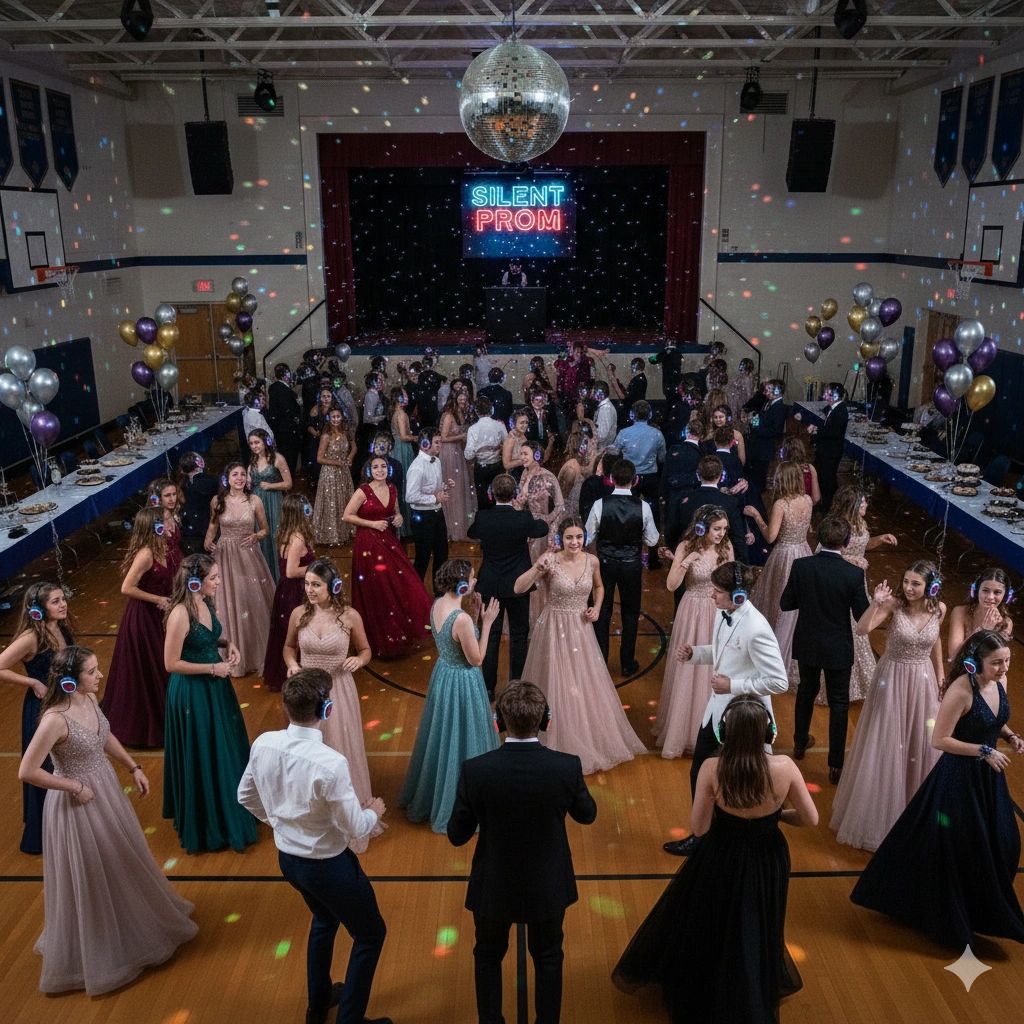
Silent discos eliminate the "wall of sound." Because there are no loudspeakers, the room itself is surprisingly quiet. There is no thumping bass vibrating the floorboards. This creates a calmer physical environment that is much easier for sensitive students to navigate.
3. Inclusion, Not Segregation
Many schools try to solve the sensory issue by creating a separate "Sensory Room" or "Quiet Zone" down the hall. While well-intentioned, this often feels like segregation. It forces students to choose between being comfortable and being with their friends.
A silent disco allows the "quiet zone" to exist on the dance floor. If a student gets overwhelmed, they can simply take the headphones off. Instantly, the chaos disappears. They can stand right in the middle of the party, talk to their friends, and take a break—without having to leave the room.
4. Visual Engagement (Without the Strobe)
Sensory-friendly doesn't have to mean "boring." The LED lights on the headphones (Red, Green, Blue) provide a fun, visual way to engage with the party. For many neurodivergent students, this visual element is fascinating and engaging, allowing them to participate in the "vibe" of the party even if they aren't dancing or listening to loud music.
5. Less Yelling, More Socializing
At a loud dance, students have to scream to be heard. This adds to the chaotic "noise clutter" that causes anxiety. At a silent disco, the ambient noise level is low—mostly just shuffling feet and occasional singing. This lower baseline volume reduces stress for everyone (chaperones included!) and makes the environment feel safer.
How to Pitch This to Your School Board
If you are a teacher, parent, or student council member trying to bring a silent disco to your school, here are the key selling points:
- Inclusivity: It meets DEI (Diversity, Equity, and Inclusion) goals for neurodivergent students.
- Safety: Lower noise levels protect students' hearing.
- Cost-Effective: Renting from SE2 is often comparable to or cheaper than hiring a high-end DJ with a massive sound rig.
Make Your Next Dance for Everyone
Don't let sensory barriers keep students from making memories. With a silent disco, the loudest kid in class and the quietest kid in class can dance side-by-side.
Ready to plan an inclusive prom, homecoming, or fundraiser? We work with schools across the country (and offer free local delivery for schools in Buffalo/WNY).
Get a quote for your school at se2.events.