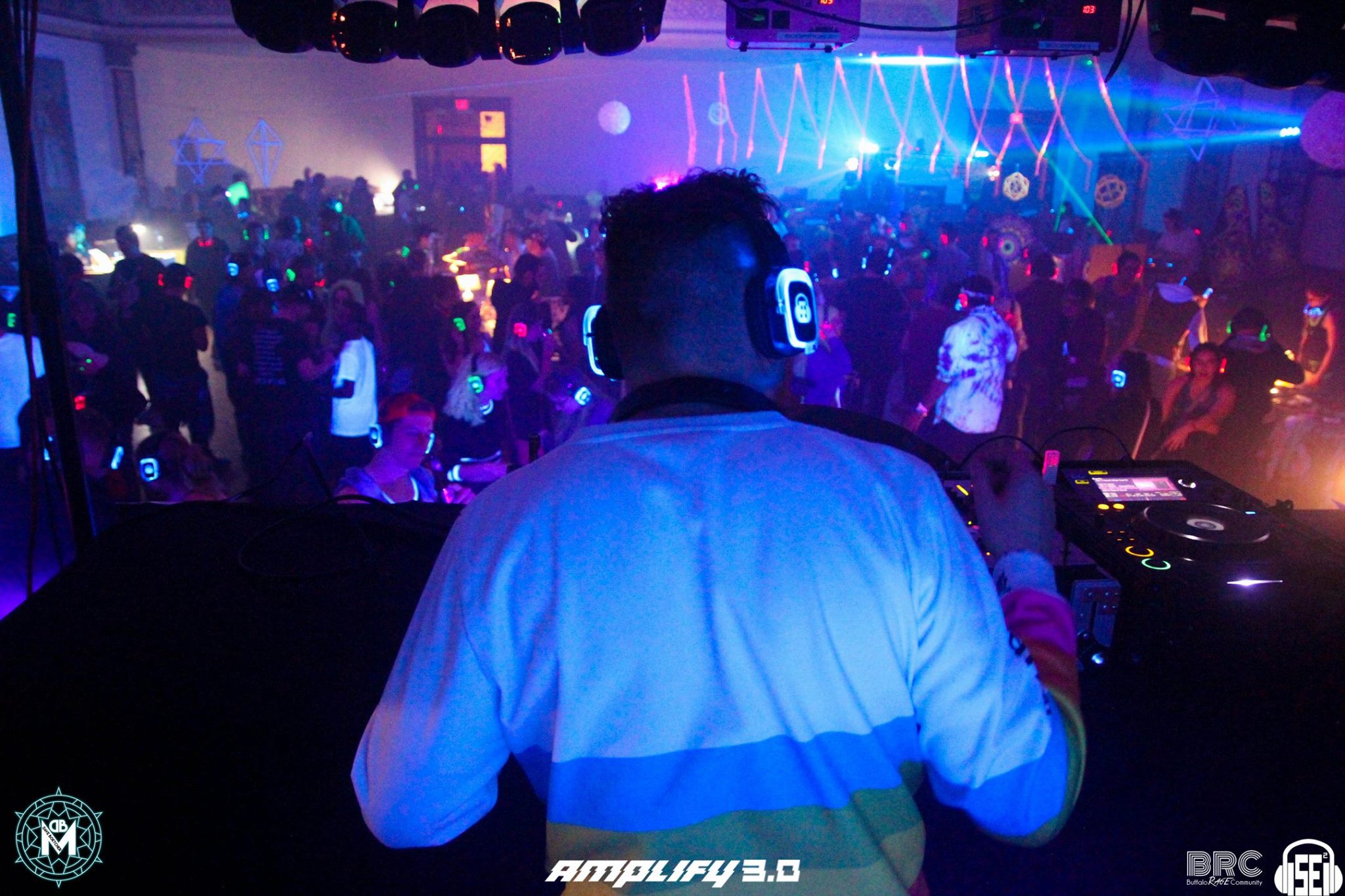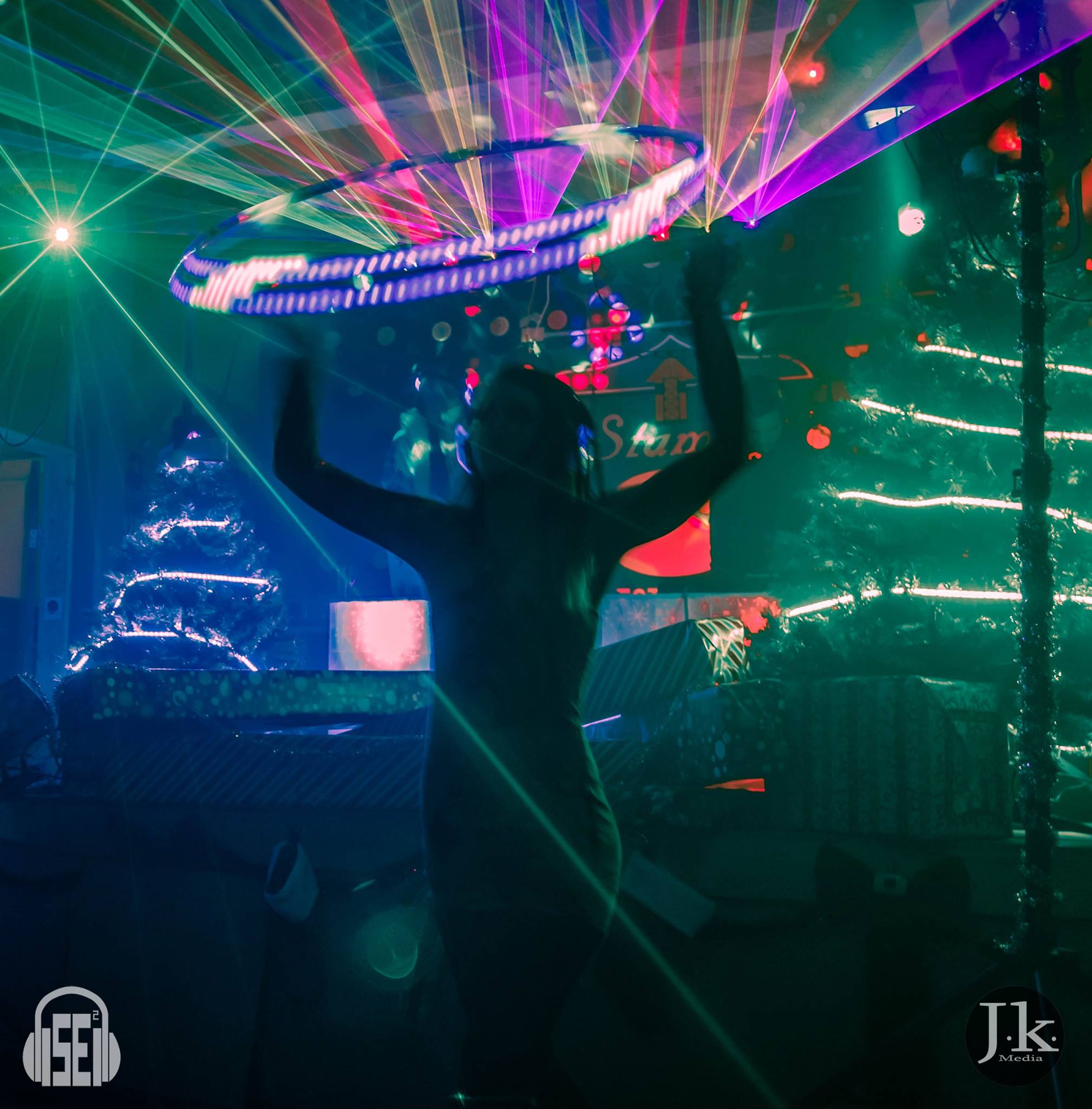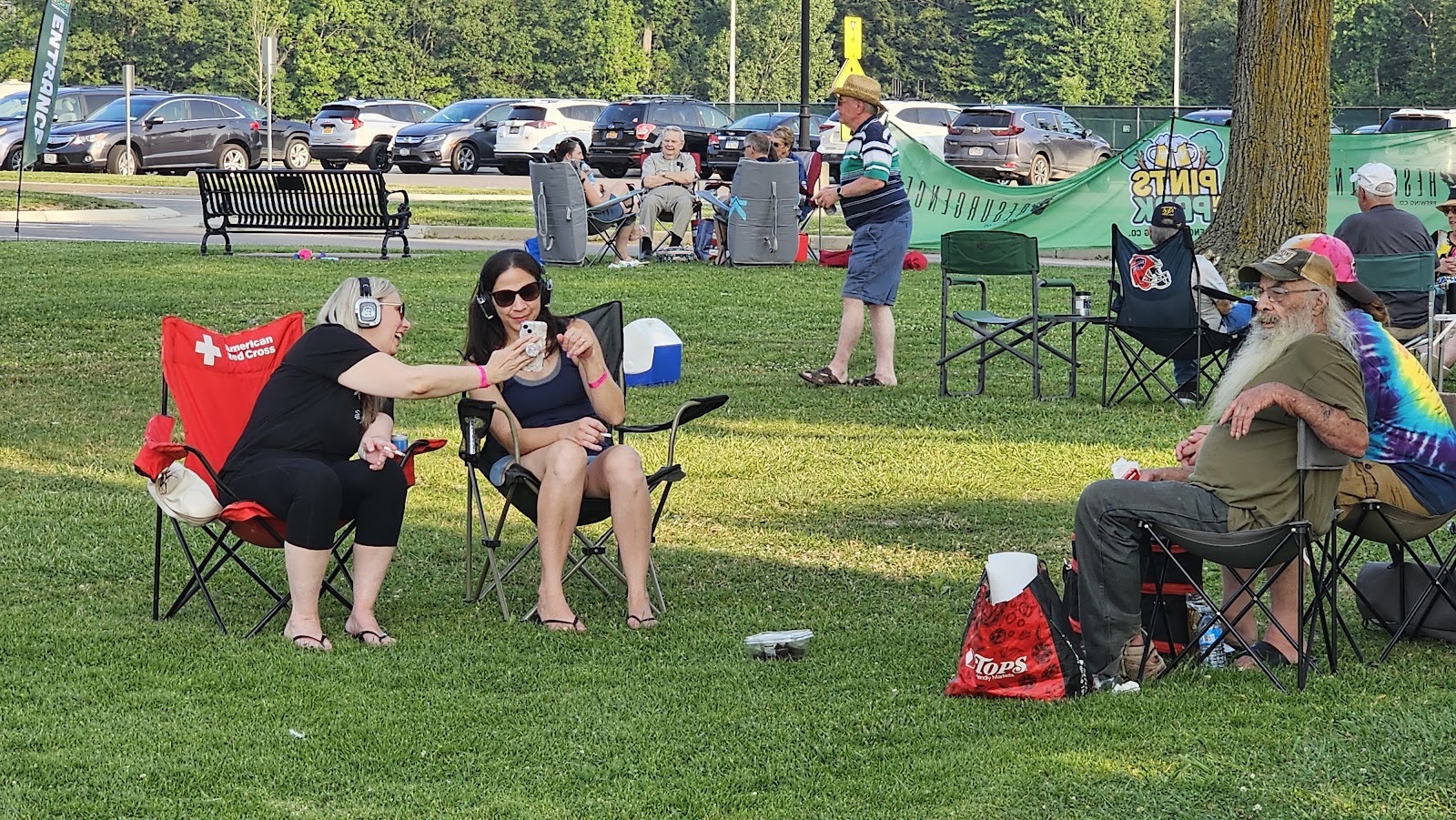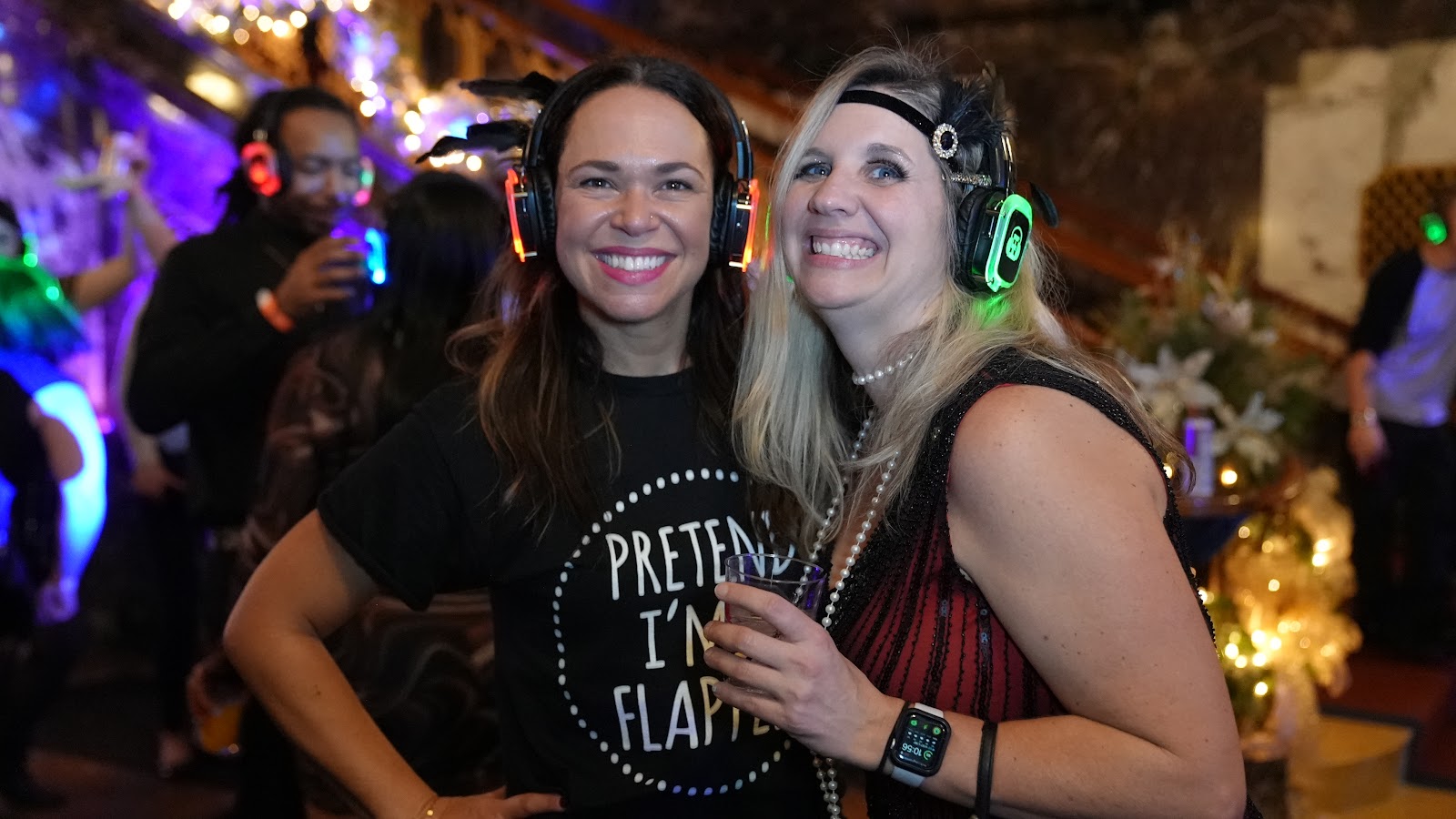

Silent disco headphones receive music wirelessly from a nearby transmitter, not from each guest’s phone. For a rental event, the most important decision is usually the audio plan: choose the number of channels and decide whether guests will hear one playlist, several DJs, or a mix of both before you finalize equipment. That choice affects the transmitter setup, DJ connections, staffing, and quote.
How do silent disco headphones work?
A silent disco uses three main pieces of equipment: wireless headphones, one or more audio transmitters, and an audio source such as a DJ mixer, laptop, phone, or playback system. The transmitter sends the audio signal over a dedicated wireless connection. Each headphone receives that signal and plays it through its built-in speakers.
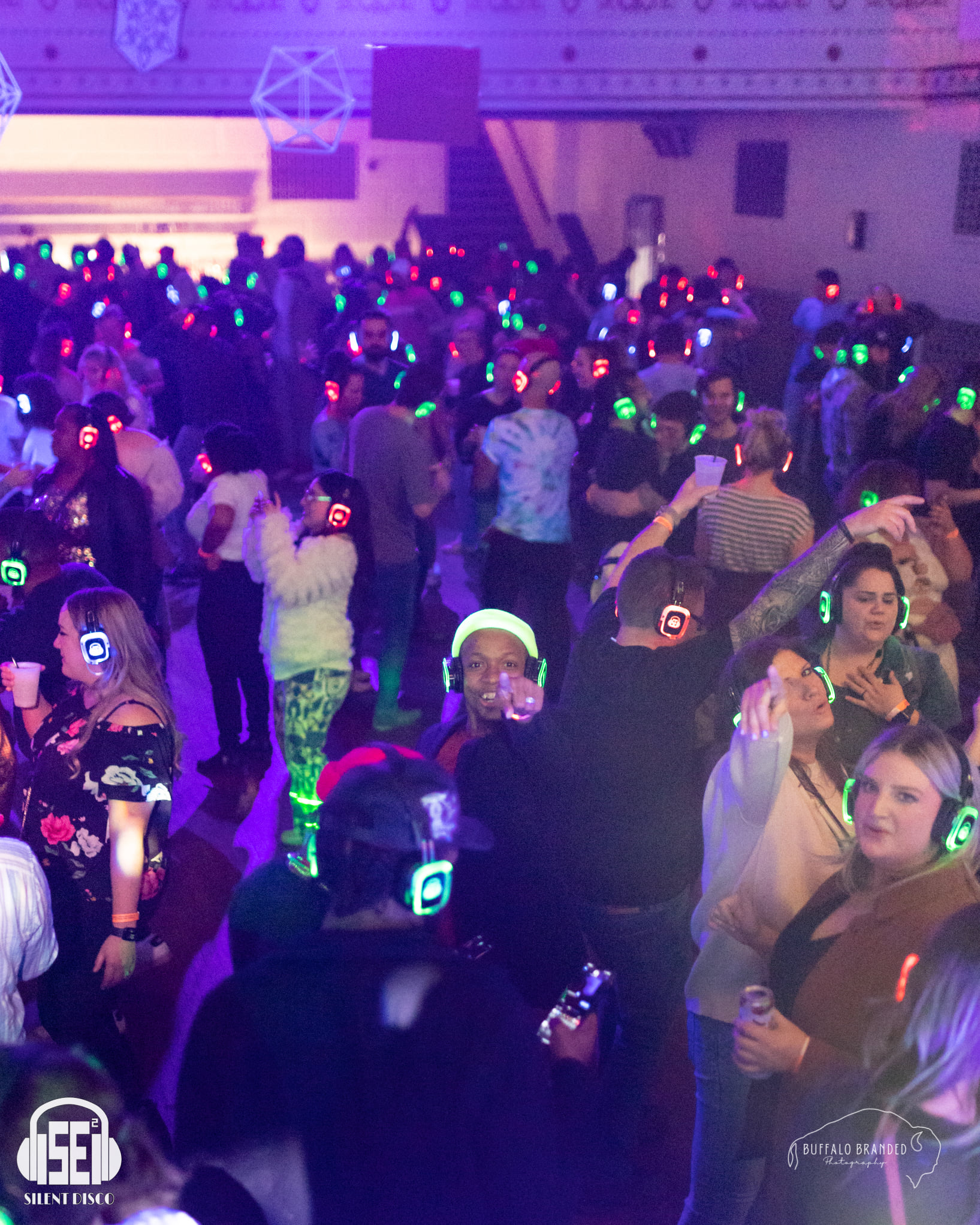
Most silent disco headphones include channel buttons or a channel selector. Guests can move between available audio channels, often with a button press, and colored LEDs usually show which channel is active. The headphones are not connected to one another. Each unit receives the broadcast independently, so guests can listen to different music while standing in the same room.
That is the practical answer to how does a silent disco work: the sound travels to headphones instead of venue speakers. The dance floor can stay energetic without sending the same volume through the entire building. People who want to talk can remove their headphones, while others can keep dancing.
For a Buffalo wedding, Rochester school dance, corporate event, fundraiser, festival, or private party, the technology is only one part of the decision. The venue’s layout, the number of listeners, and who controls the music matter just as much.
What is connected to silent disco headphones?
The headphones themselves are wireless. They are connected by radio frequency to a transmitter, while the transmitter is connected to an audio source. That source may be a DJ controller, mixer, laptop, phone, music player, microphone system, or another compatible output.
A basic one-channel setup might look like this:
- DJ, laptop, or playback device
- Audio cable from the source to the transmitter
- Transmitter connected to power
- Charged headphones distributed to guests
A multi-channel setup adds a separate audio feed for each channel. For example, one DJ may provide multiple mixes through a mixer, or separate DJs may each feed a transmitter or channel input, depending on the equipment configuration.
The host should ask one question early: Who is responsible for the audio content? A rental-first event may need only the headphones and transmission equipment if the host already has a DJ. A supported production may also need DJ coordination, sound inputs, lighting, setup assistance, or an operator.
The final quote depends on guest count, date, venue, travel, shipping, staffing, DJ support, lighting, and channel needs. Those factors matter more than choosing a package by headphone count alone. See the available silent disco headphone rentals and silent disco packages before requesting a comparison.
How many channels can silent disco headphones have?
The number of channels depends on the headphone and transmitter system. Many event systems support three selectable channels, although some setups use fewer or require a custom configuration. The correct answer for your event is the number supported by the specific equipment being rented, not a universal limit for every silent disco headphone.
Three channels are useful when the audience has different preferences. A wedding might offer a broad dance playlist, a throwback playlist, and a quieter conversation-friendly option. A school dance could separate current hits, throwbacks, and a student-request channel. A corporate event might use one channel for the main DJ, one for an activity host, and one for background or alternate programming.
More channels create flexibility, but they also add coordination. Each channel needs a clear audio source, someone responsible for monitoring it, and a plan for transitions. If two channels play nearly identical music, guests may not understand why they should switch. If every channel is managed by a different DJ, sound checks and communication become more important.
A useful planning calculation is to estimate how many active audio sources you can actually manage. If you have one DJ and no additional operator, one strong channel may be better than three poorly coordinated ones. If your audience spans age groups or your event includes multiple activities, two or three purposeful channels can make the rental more valuable.
Can guests switch between DJs or playlists?
Yes. Guests can switch between available channels using the controls on their headphones. The channel selector typically changes the audio feed and the headphone’s colored indicator. They can move back and forth during the event without returning the headphones to staff.
The headphones do not choose the music automatically. Someone still has to supply and manage each channel. That may be one DJ using multiple outputs, several DJs, a playlist operator, or a combination of live programming and preplanned audio.
This creates a clear tradeoff. Multiple DJs can give a party a stronger sense of choice, but they require a shared timeline and reliable handoffs. Multiple playlists are easier to preplan, but they need testing so volume and playback behavior are consistent. For a school or nonprofit fundraiser, assigning one person to each channel may be unnecessary; a tested playlist plan can reduce staffing needs.
Hosts should also label the channels in plain language. “Main,” “Throwbacks,” and “Requests” are more useful than technical labels. Tell guests how to switch before the first song, then repeat the instruction as people arrive. A short demonstration prevents many avoidable questions.
How far do silent disco headphones work from the transmitter?
Wireless range depends on the equipment, transmitter placement, building materials, crowd density, interference, and whether guests move outdoors or between rooms. The transmitter should be placed where it has a clear, practical relationship to the listening area rather than hidden behind heavy structures or placed at the far edge of the venue.
For planning purposes, map the actual guest area. A compact ballroom, brewery floor, patio, or school gym may behave very differently from a multi-room venue. Concrete, metal, thick walls, parked vehicles, and long corridors can affect the signal. Outdoor events also require attention to power, weather protection, and the distance between the transmitter and the farthest listener.
Do not treat the advertised range of a wireless system as a promise that every location will perform identically. A site check or a detailed venue conversation is more useful. Tell SE2 whether guests will use multiple rooms, a rooftop, a patio, a festival area, or a long entrance route. That information helps determine transmitter placement and whether additional equipment or staffing is appropriate.
SE2 supports events across Buffalo, Rochester, and Western New York, as well as shipped rentals when the event is outside the local service area. Travel, shipping, return logistics, and on-site support can shape the quote.
Do silent disco headphones need Wi-Fi?
No. Silent disco headphones do not need the venue’s Wi-Fi to receive the event audio. The headphones receive a direct wireless transmission from the event transmitter. The audio source may use the internet for streaming, but that is separate from the headphone connection.
For a dependable event, downloaded playlists or locally connected audio can be worth considering when internet service is uncertain. A DJ using local music files may not need venue Wi-Fi at all. If the plan depends on streaming, confirm the venue’s connection, account access, and backup plan before guests arrive.
This distinction matters in older buildings, outdoor spaces, school facilities, and venues with restricted networks. It also makes silent disco practical for many private parties where the host wants fewer dependencies on the venue’s installed sound system.
How are silent disco headphones charged?
The headphones use rechargeable batteries and must be charged before the event. Rental providers typically prepare the equipment in advance, but the host should still ask how the units arrive, how they are stored, and what happens if the event runs longer than expected.
A good handoff plan includes:
- Confirming the expected guest count and a reasonable equipment buffer
- Identifying where headphones will be distributed and collected
- Keeping a process for checking units in and out
- Asking whether on-site charging or replacement support is available
- Planning where returned headphones will be placed after the event
Final guest numbers can change. If you expect 50 people but attendance may move higher or lower, ask when the final count is needed and whether the equipment can be adjusted after the initial quote. That is a normal rental question, not a minor detail; headphone quantity affects packing, shipping, staffing, and availability.
Guests should also receive a quick care instruction: keep the headphones on the head or in the designated return area, avoid placing them on wet surfaces, and report a problem rather than forcing a control or connector.
Can a DJ control the music at a silent disco?
Yes. A DJ can control one channel or, with the right mixer and output arrangement, manage several channels. The DJ’s equipment connects to the transmitter system through compatible audio outputs. The exact setup should be confirmed before the event because not every DJ controller, mixer, or venue sound system uses the same connections.
If the host is bringing a DJ, share the channel plan in advance. Confirm:
- How many channels the DJ will control
- Whether each channel has a separate audio output
- Which cables or adapters are required
- Who will monitor the transmitter and headphone response
- How music will continue during breaks or technical changes
A DJ-led setup usually gives the strongest live interaction. A playlist-led rental can be more predictable and may need less staffing. A hybrid setup can work well when one channel is live and another provides a prepared alternative.
For a silent disco wedding, the DJ may need to coordinate with speeches, dinner, and venue announcements. For a silent disco school dance, staff may prioritize simple controls and clear supervision. For a silent disco corporate event or fundraiser, the schedule may matter more than constant music changes. The right package follows the program, not the other way around.
Which setup should you choose for your event?
Start with four decisions: guest count, venue footprint, audio responsibility, and channel purpose. Those answers will narrow the rental choice faster than browsing generic package names.
- Choose a straightforward rental when you already have a DJ or playlist operator and mainly need headphones and transmission equipment.
- Consider supported service when the event has several channels, a complex venue, a large guest movement area, or limited staff to manage handoff and troubleshooting.
- Consider custom production when you need unusual audio routing, lighting, branded elements, multiple activity zones, or a schedule that combines silent disco with other programming.
SE2 can support private parties, weddings, schools, corporate gatherings, fundraisers, festivals, and other productions. Explore private party silent disco packages, wedding silent disco options, or corporate event formats based on the event’s actual needs.
For local planning, review Buffalo silent disco events or Rochester silent disco events. If you are comparing silent disco rentals near me, include the venue address, estimated attendance, event date, indoor or outdoor location, number of channels, DJ plan, and whether pickup, delivery, shipping, or staffing is needed. Then request a silent disco quote with enough detail for a useful comparison.
Frequently asked questions
How do silent disco headphones receive music?
They receive a wireless audio signal from a transmitter connected to a DJ, mixer, laptop, phone, or other audio source. The headphones do not need to be plugged into the venue sound system.
What is connected to silent disco headphones?
The headphones connect wirelessly to the event transmitter. The transmitter connects by audio cable to the equipment producing the music.
How many channels can silent disco headphones have?
The number depends on the equipment system. Many event setups support three selectable channels, but the exact channel count should be confirmed for the rental being considered.
Can guests switch between DJs or playlists?
Yes. Guests can select an available channel using the headphone controls. Each channel must have a planned audio source and someone responsible for managing it.
How far do silent disco headphones work from the transmitter?
Range depends on the system, transmitter placement, building materials, interference, and venue layout. A clear site plan is more reliable than assuming one range applies to every venue.
Do silent disco headphones need Wi-Fi?
No. The headphones receive audio from the transmitter rather than the venue Wi-Fi. Internet may still be needed if the music source relies on streaming.
How are silent disco headphones charged?
They use rechargeable batteries and should arrive charged for the rental. Ask about charging, longer events, backup units, and the process for returning equipment.
Can a DJ control the music at a silent disco?
Yes. A DJ can control one or more channels when the mixer or controller has the appropriate outputs and the channel plan is confirmed in advance.
What affects the cost of a silent disco rental?
Quotes depend on guest count, date, venue, travel, shipping, staffing, DJ support, lighting, and channel needs. Requesting a quote with those details produces a more accurate comparison than asking only for a headphone price.
Plan your silent disco
- silent disco headphone rentals
- silent disco packages
- Buffalo silent disco events
- Rochester silent disco events
- private party silent disco packages
- Custom silent disco production
- School silent disco events
Frequently asked questions
How do silent disco headphones receive music?
They receive a wireless audio signal from a transmitter connected to a DJ, mixer, laptop, phone, or other audio source.
Do silent disco headphones need Wi-Fi?
No. The headphones receive audio directly from the transmitter. Wi-Fi is only relevant if the music source depends on streaming.
Can guests switch between DJs or playlists?
Yes. Guests can use the headphone controls to select among the available audio channels.
How far do silent disco headphones work from the transmitter?
Range varies by equipment, transmitter placement, venue construction, interference, and the size of the listening area.
What affects a silent disco rental quote?
Guest count, date, venue, travel, shipping, staffing, DJ support, lighting, and channel needs all influence the final quote.