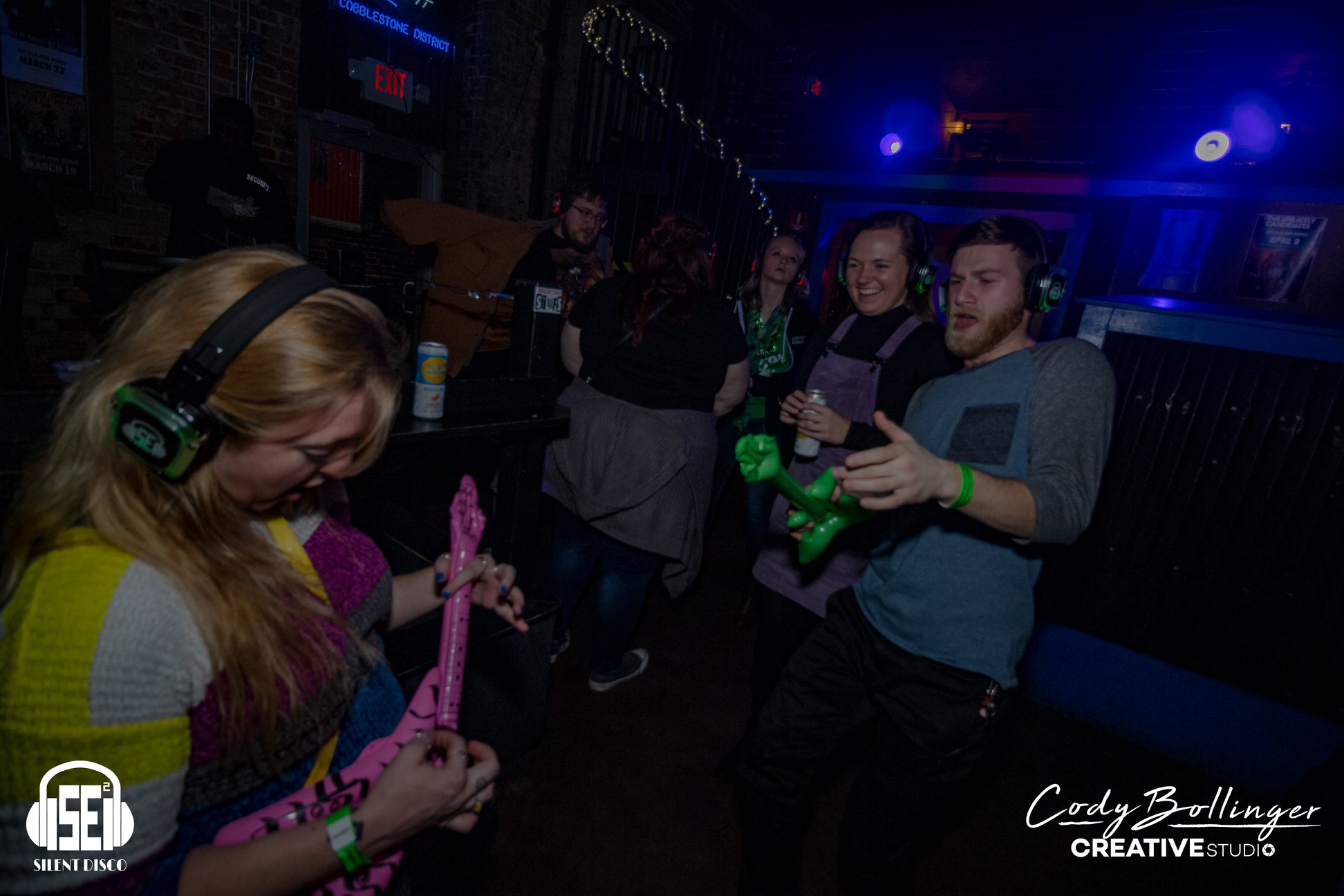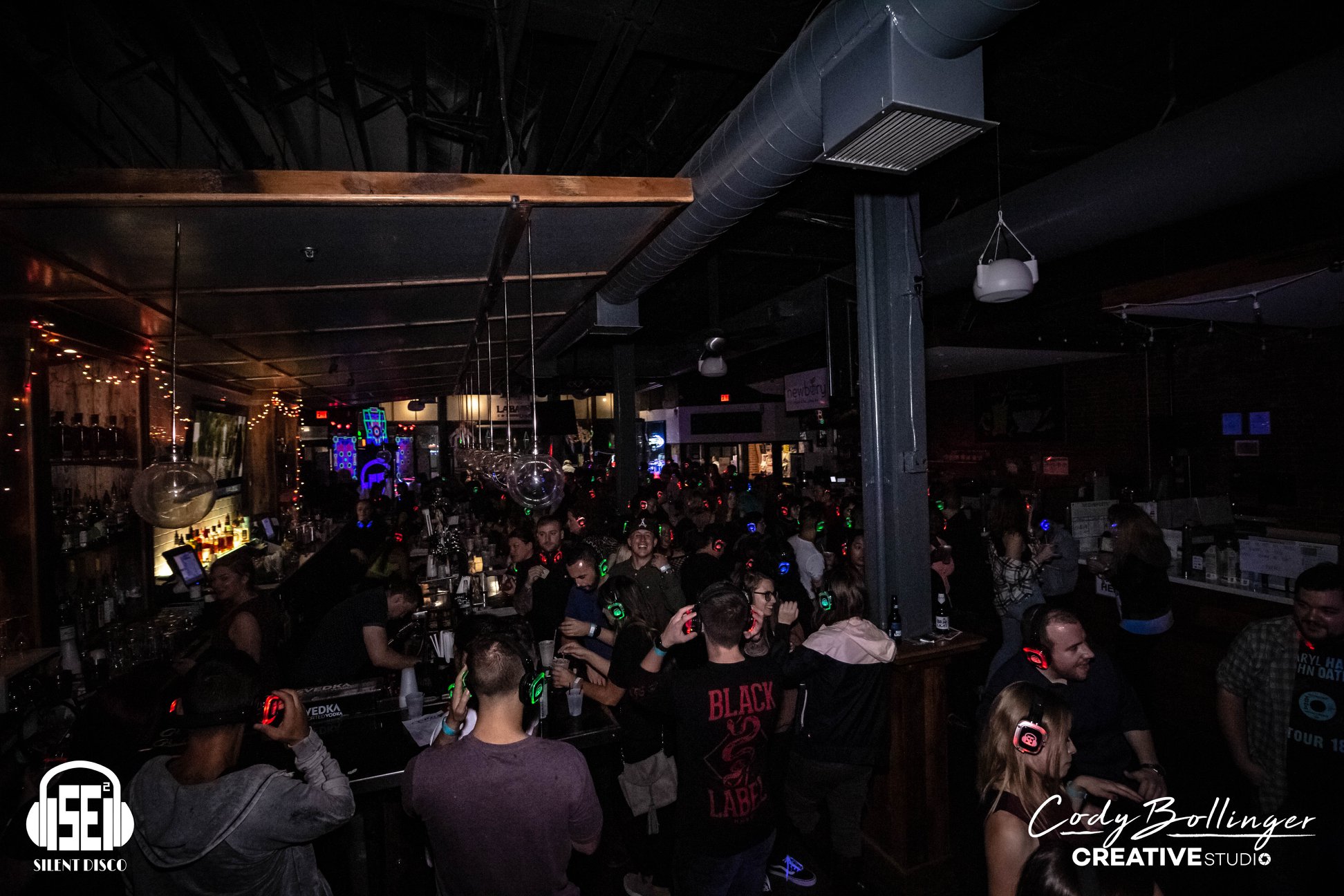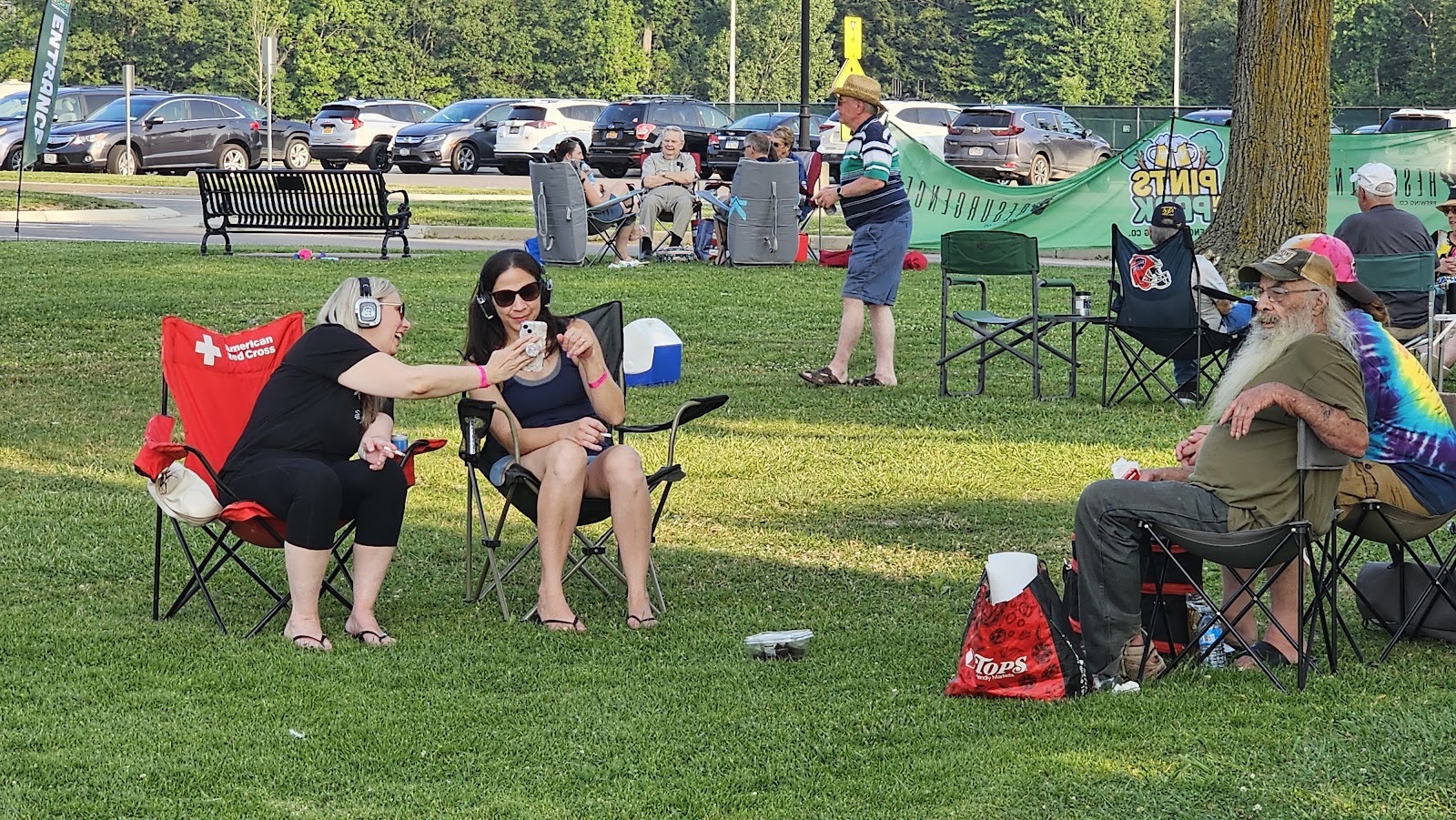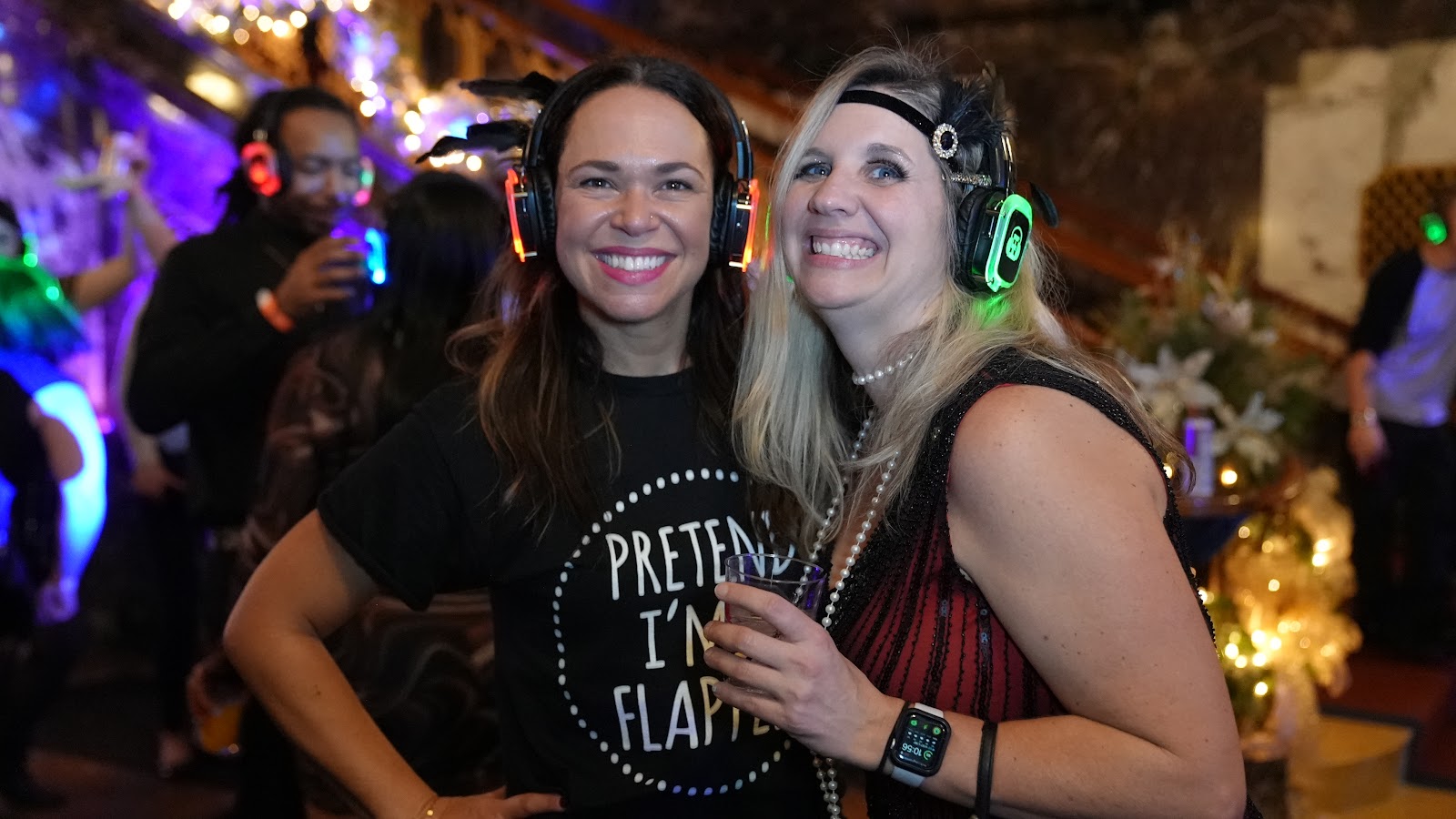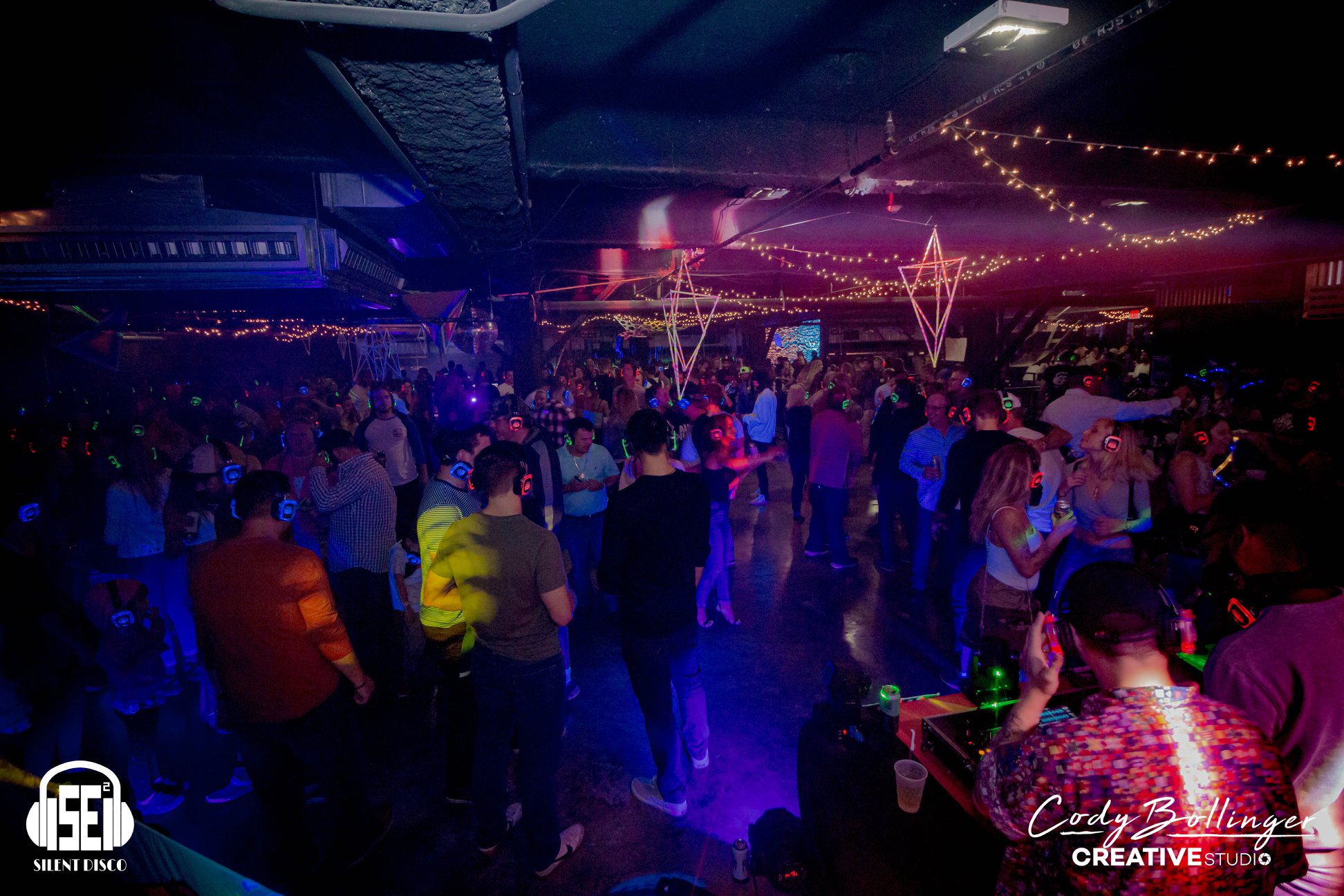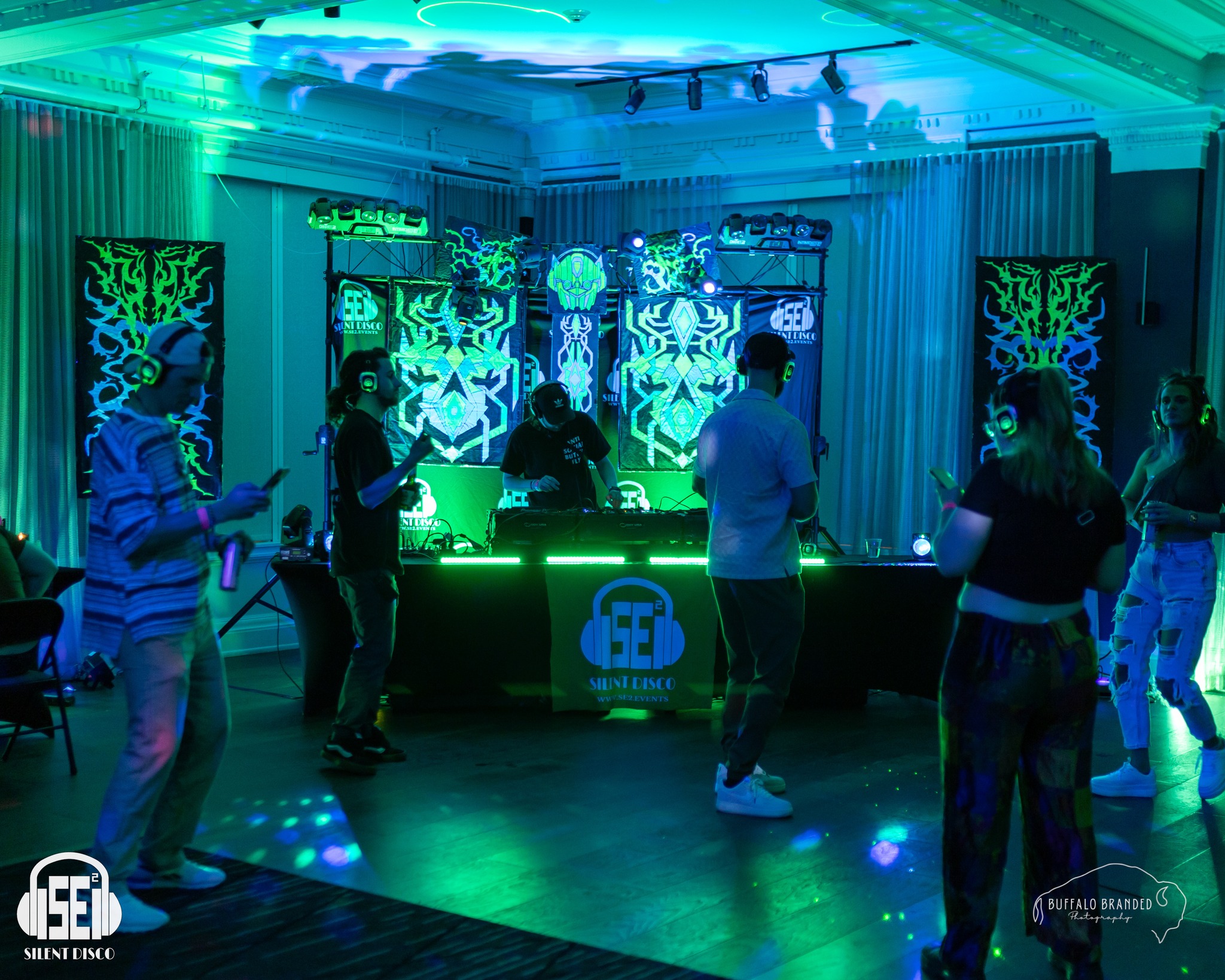
The short answer to how does silent disco work is this: a transmitter sends audio wirelessly to special headphones, and each guest chooses the channel they want to hear. For planning, make the first decision your expected headphone count—not your playlist—because guest count affects equipment, transmitter capacity, staffing, and the final quote.

How a silent disco works

A silent disco replaces a shared speaker system with individual wireless headphones. The event still has music, a DJ or playlist, dancing, and a host-led schedule; the main difference is where guests hear the sound.

The basic signal path is:

  1. A DJ, phone, laptop, mixer, or other audio source plays music.
  2. A wireless transmitter broadcasts that audio to compatible headphones.
  3. Guests put on illuminated headphones and select an available channel.
  4. Each headphone receives the selected channel directly, without room-filling speakers.

The headphones usually include volume controls and channel buttons. Indicator lights show which channel is active, so guests can see whether they are listening to one DJ, another DJ, or a different playlist.

This setup is useful when a host wants dancing without committing the entire room to one volume level. It can also help events share a venue with nearby rooms, businesses, neighbors, or other programming. “Silent” does not mean completely soundless, however. People may hear faint headphone leakage, conversations, laughter, and movement on the dance floor.

How do silent disco headphones connect to the music?

Silent disco headphones connect through a dedicated wireless transmitter rather than ordinary Bluetooth pairing. The transmitter is connected to the audio source, and the headphones are tuned to the transmitter’s channel system.

That distinction matters for hosts. Guests generally do not need to download an app, pair individual phones, or manage a separate connection. The rental provider or production team handles the compatible transmitter and headphone system, while the event host focuses on the music plan and guest experience.

For a small private party, the audio source might be a supplied playlist or a DJ controller. For a larger production, the system may include multiple transmitters, mixers, microphones, lighting, and DJ positions. Ask what is included before comparing a silent disco headphones rental, because “headphones only” and a supported production package are very different options.

A practical handoff plan should cover:

  • Where guests receive and return headphones.
  • Who explains the channel controls.
  • How used or uncharged units are identified.
  • Where transmitters and audio equipment can be placed safely.
  • Whether the venue has reliable power near the DJ or control area.

Do guests hear the same music?

No. Guests hear the channel they select. A one-channel setup gives everyone the same audio, while a multi-channel setup lets guests choose among different DJs, playlists, or audio sources.

The tradeoff is straightforward: more channels create more choice but require more programming, coordination, and equipment planning. Two well-organized channels may create a better night than three poorly prepared playlists. If a host expects guests to switch often, the music identities should be obvious—for example, different genres, DJs, or color-coded channel labels.

A three-channel event might use:

  • Channel one for a current dance playlist.
  • Channel two for throwbacks, rock, or a second DJ.
  • Channel three for requests, a cultural playlist, or a quieter option.

Hosts should decide whether variety is genuinely useful for their audience. A silent disco wedding may benefit from broad musical choice because guests span generations. A school dance may need age-appropriate programming and clear adult supervision. A corporate event may use fewer channels and place more emphasis on networking, announcements, and predictable timing.

How many channels can a silent disco have?

The number of channels depends on the equipment system, transmitter setup, audio sources, and production plan. Many silent disco formats use one, two, or three channels, but the appropriate number is a planning choice rather than a fixed feature.

Before requesting a quote, answer these questions:

  1. How many guests are expected?
  2. Will there be one DJ, multiple DJs, or prepared playlists?
  3. Does every channel need a dedicated operator?
  4. Will announcements interrupt the music channels?
  5. Is the event mainly dancing, or does it include speeches, games, or presentations?

The most useful calculation is not simply “guests divided by channels.” Estimate the maximum number of headphones needed, then identify the number of active audio sources. For example, a 50-person event with two DJs may need approximately 50 working headphones, two compatible audio feeds, and a handoff plan for guests arriving at different times. If attendance may rise or fall, ask when final numbers are needed and whether equipment can be adjusted before the event.

If you anticipate adding transmitters or expanding the setup, mention that during the first inquiry. It is usually better to plan the signal architecture before equipment is packed than to discover that a last-minute channel request affects the whole production.

Can guests switch between DJs or playlists?

Yes. Guests can normally press the channel control on the headphones and move between available audio feeds. The exact control layout varies by system, so a short explanation at check-in is worthwhile.

Channel switching is one of the strongest reasons to choose a silent disco, but it works best when the choices are easy to understand. Use visible channel colors, simple playlist names, and a brief announcement at the beginning. If DJs are involved, coordinate transitions so each channel remains active and intentional.

There is also a social tradeoff. A shared speaker system gives everyone the same musical moment. A silent disco gives guests control, which can keep more people engaged, but it means the dance floor may be experiencing several different songs at once. That is not a flaw; it is the format. Hosts should choose it because personal choice and volume flexibility matter more than one synchronized soundtrack.

Does a silent disco need a DJ?

No. A silent disco can use a DJ, multiple DJs, playlists, or another live audio source. The right choice depends on how much hosting and real-time music control the event needs.

A DJ is useful when the event needs crowd reading, requests, announcements, transitions, or a structured dance experience. Curated playlists may be enough for a private gathering, fundraiser, wedding after-party, or casual school activity when the host already has suitable music and someone responsible for playback.

Do not assume that a DJ automatically solves the technical plan. You still need to confirm the number of channels, audio inputs, microphone needs, venue access, setup time, and who is responsible for guest instructions. Likewise, a playlist-only event still needs a reliable playback device, organized files, and a person assigned to monitor the audio.

SE2 can help compare a straightforward silent disco rental, a broader set of silent disco packages, or a custom silent disco production when the event needs more than headphones and transmitters.

Indoor, outdoor, and local venue considerations

Silent disco headphones can work indoors and outdoors, but the venue still determines much of the setup. Buffalo and Western New York events may involve breweries, school gyms, private homes, waterfront spaces, patios, fundraisers, and corporate venues. Rochester hosts face many of the same questions, especially around access, weather, power, parking, and setup windows.

For any venue, confirm:

  • Available power near the audio control area.
  • A secure location for transmitters and cases.
  • A check-in and return table that will not block entrances.
  • Weather protection for outdoor equipment and guests.
  • Whether the venue has sound restrictions or a required end time.
  • How the production team will load in and remove equipment.
  • Whether the event includes speeches that require a microphone feed.

Outdoor range can be affected by obstructions, layout, and transmitter placement. Keep the dance area within the planned coverage zone, and do not treat a large open property as automatically equivalent to a compact indoor room.

For a Buffalo event, review the venue’s loading and noise rules early. For a Rochester rental or a shipped setup, clarify delivery timing, return requirements, and who will receive the equipment. A quote should reflect the actual logistics rather than only the number of headphones.

What affects a silent disco rental quote?

There is no responsible one-size-fits-all price for a silent disco. The final quote depends on guest count, date, venue, travel, shipping, staffing, DJ support, lighting, and channel needs.

A rental-first host should compare these items:

  • Headphone quantity and whether a reserve allowance is included.
  • Number of transmitters and active channels.
  • Pickup, delivery, or shipped-rental responsibilities.
  • Setup and teardown support.
  • DJ, playlist, microphone, or technical support.
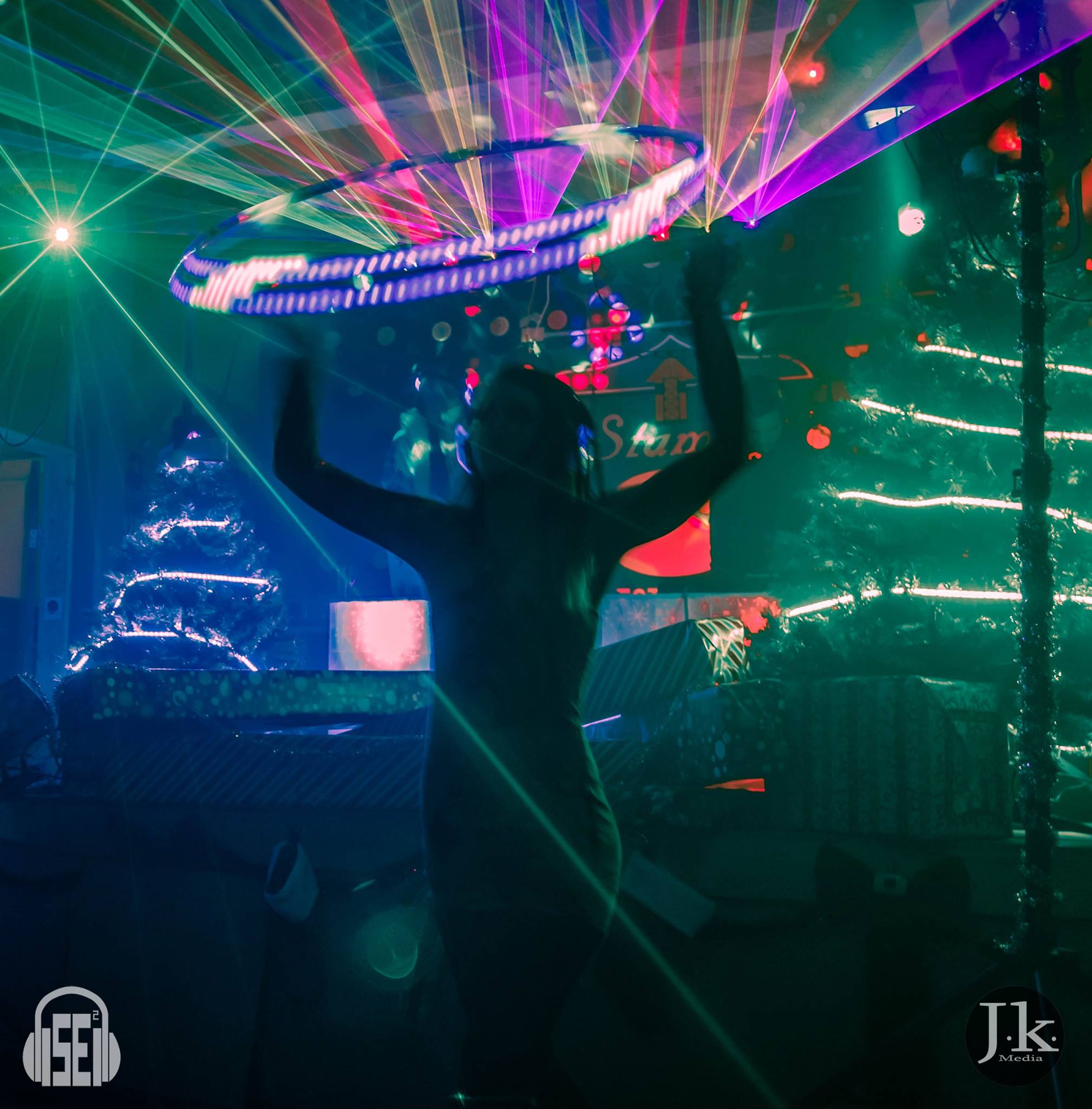
  • Lighting and other production additions.
  • Travel to Buffalo, Rochester, or another Western New York location.
  • Event duration and access windows.

Pickup may make sense for a prepared local host with a straightforward venue and a person assigned to manage returns. Delivery or staffing may be the better choice when the event has a tight schedule, multiple channels, public-facing guests, or a complex room. Shipped rentals can extend the service area, but the host must plan for delivery timing, charging, secure storage, and return shipping.

Start with the silent disco rental process: provide the estimated guest count, event type, city, date, venue conditions, desired channels, and whether you need DJ or production support. If the count may change, say so instead of waiting until the final week.

Choosing the right setup for your event

The best package is the one that matches the event’s actual decision points. A silent disco wedding may need multiple generations of music and a clear transition from dinner to dancing. A silent disco school dance may prioritize supervision, simple channel labels, and age-appropriate content. A silent disco corporate event may need microphones and a controlled schedule. A silent disco fundraiser may benefit from flexible programming and an easy check-in process.

Review SE2’s options for weddings and after-parties, schools and colleges, corporate events, and fundraisers and nonprofits. Hosts comparing local options can also review Buffalo silent disco events or Rochester silent disco events.

The better question is not “How many features can we add?” It is “What could make this event fail if we do not plan it?” For most rental-first hosts, that means confirming headphone count, audio sources, venue access, and responsibility for guest handoff before choosing extra lighting or additional channels.

FAQ

How does a silent disco work?

A transmitter sends audio wirelessly to special headphones. Guests select a channel on the headphones, adjust their own volume, and can switch between available DJs or playlists.

Do silent disco guests hear the same music?

Only if they choose the same channel. Multi-channel events let guests hear different music at the same time, while a single-channel event gives everyone one shared audio feed.

How do silent disco headphones work?

They receive audio from a compatible event transmitter. Guests do not normally pair each unit to a phone; they use the headphone controls to select a channel and adjust volume.

Can a silent disco use more than one DJ?

Yes. Each DJ can feed a separate channel when the equipment and production plan support it. Confirm the number of transmitters, audio inputs, and operators before booking.

Can silent disco headphones be used indoors and outdoors?

Yes, provided the venue layout, power, weather protection, transmitter placement, and coverage area are planned correctly. Outdoor events need a more careful equipment and weather plan.

How loud is a silent disco for people without headphones?

People nearby may hear faint sound leakage, conversations, and dancing, but they will not hear the full music mix as they would from conventional speakers. “Silent” means the music is primarily contained in the headphones, not that the room is completely quiet.

What should I include when asking for a quote?

Include the city, date, venue, estimated guest count, expected count range, number of channels, DJ or playlist plans, indoor or outdoor layout, and whether you need delivery, staffing, lighting, or shipped rentals. Request a quote from SE2 with those details for a more useful comparison.

Planning checklist

  • Confirm the maximum expected headphone count, not only the current RSVP total.
  • Choose one, two, or three channels based on actual music needs.
  • Decide whether you need a DJ, playlists, microphones, or technical support.
  • Verify venue power, load-in access, weather protection, and coverage area.
  • Assign responsibility for headphone check-in, instructions, and returns.
  • Ask about final guest-count deadlines if attendance may change.
  • Compare pickup, delivery, staffed service, and shipped-rental logistics.
  • Request a quote that lists travel, shipping, staffing, lighting, and channel assumptions.

The practical takeaway is simple: silent disco equipment is only one part of the decision. Choose the headphone count and channel plan first, then compare the rental support that will make those choices work in your actual Buffalo, Rochester, or Western New York venue.

Plan your silent disco

Frequently asked questions

How does a silent disco work?

A transmitter sends audio wirelessly to special headphones. Guests select a channel, adjust their volume, and can switch between available DJs or playlists.

Do silent disco guests hear the same music?

Only guests on the same channel hear the same music. Multi-channel events allow different DJs or playlists to play at the same time.

How many channels does a silent disco have?

The number depends on the equipment and event plan. One, two, or three channels are common formats, but the right choice depends on the number of audio sources and how much variety guests need.

Does a silent disco need a DJ?

No. A silent disco can use one or more DJs, curated playlists, or another audio source. DJs are useful for requests, crowd reading, announcements, and live transitions.

Can silent disco headphones be used indoors and outdoors?

Yes, when the venue layout, power, transmitter placement, coverage, and weather protection are planned correctly.

What affects a silent disco rental quote?

Quotes depend on guest count, date, venue, travel, shipping, staffing, DJ support, lighting, channel needs, event duration, and access requirements.