To host a silent disco, plan four things first: the number of guests, the venue layout, the music-channel setup, and who will handle delivery and event support. For a corporate event in Buffalo or Rochester, a practical starting point is to reserve headphones for your expected attendance plus a small operating cushion, then confirm power, weather protection, load-in access, and whether your DJs or SE2 Silent Disco will control the channels.
1. Define the event before comparing rentals
Start with the experience you want guests to have, not just the equipment list. A silent disco can be a corporate team-building activity, wedding after-party, fundraiser, school dance, private celebration, festival feature, or shared music experience for a large group. Each format changes the best rental plan.
Write down:
- Expected guest count and maximum possible attendance
- Event date, duration, and access window
- Indoor, outdoor, rooftop, patio, or mixed setting
- Whether guests will dance, move between activities, or listen while seated
- Number of DJs, performers, speakers, or presenters
- Whether you need delivery, setup, pickup, teardown, or shipped rentals
- Lighting, microphones, staging, and other production needs
A useful local example is a Buffalo or Rochester corporate event where part of the group wants a high-energy dance channel while others prefer a familiar mix or a lower-key conversation break. The headphones let people choose without splitting the room, but that flexibility works only when the channel plan is decided before the event.
For a broader comparison of formats, review SE2’s silent disco use cases. If your event needs a more tailored production plan, custom silent disco events may be a better fit than a basic equipment-only rental.
2. Choose the equipment package
The core silent disco equipment usually includes wireless LED headphones, transmitters, charging equipment, and the audio connections needed to feed music into each channel. Depending on the event, you may also need a mixing console, microphones, DJ equipment, speakers for announcements, lighting, a hazer, extension cables, tables, signage, and staff.
A typical three-channel setup gives guests three listening choices. It does not automatically mean three DJs are required. You can run three DJs, two DJs and a playlist, or one DJ with different programmed sources, depending on the transmitter and audio configuration.
Ask these equipment questions before requesting a quote:
- How many headphones are included, and how many spares are recommended?
- How many transmitters and channels are included?
- Who supplies the music sources and DJ equipment?
- Are microphones needed for announcements or presentations?
- Is setup supervised, self-service, or fully staffed?
- What happens if a headphone is lost, damaged, or returned late?
If you are comparing a silent disco headphone rental with a full production, SE2’s silent disco rentals and silent disco packages are useful starting points. Equipment-only rentals can make sense when your organization already has DJs and an experienced event crew. Full-service support costs more, but it reduces the risk of connection problems, unclear channel switching, and slow guest onboarding.
3. Calculate how many headphones to rent
Rent headphones for the maximum realistic number of simultaneous participants, not only the number of people invited. For example, if 180 guests are expected and the dance portion may peak at 150, the rental count should be based on the peak active audience plus a sensible reserve for replacements and late arrivals.
There is no universal reserve percentage because event conditions vary. A seated corporate program with optional dancing may need a smaller cushion than a ticketed dance-focused event. Ask the rental provider how they size inventory for your format.
Also decide whether every guest needs a headset. Some events provide headphones to all attendees, while others use them only for a dance segment or breakout activity. If the program includes speakers or presentations, plan a clear handoff between headphone listening and live announcements.
Headphone count is also affected by delivery method. Local Buffalo and Rochester service may allow coordinated delivery and collection, while shipped rentals require enough time for transit, inspection, charging, repacking, and return. If someone on your team says, “I can pick them up and drop them off like last time,” confirm that the proposed equipment count, vehicle space, timing, and responsibility are still workable for this event.
4. Plan the music channels and DJ support
A silent disco can support multiple music channels, with three channels being a common choice for larger or more varied events. The exact number depends on the transmitter system, available audio sources, and the production plan. More channels create more choice, but they also require more programming, monitoring, and guest instruction.
Do you need a DJ? No. A DJ is optional, but a person still needs to manage the audio sources, channel levels, transitions, and timing. You can use your own DJs, curated playlists, live performers, or SE2 silent disco DJ support. If your organization supplies the DJs, confirm their experience with the transmitter inputs and whether they need mixers, cables, monitoring, or a dedicated technical contact.
For a corporate event, a useful channel structure might be:
- Channel 1: broadly familiar dance music
- Channel 2: current hits, house, hip-hop, or a requested genre
- Channel 3: a contrasting option such as throwbacks, rock, or a quieter mix
The best plan depends on your audience. Avoid creating three channels that sound almost identical. Choice is more valuable when each channel has a clear identity. You should also test the signal path before doors open and identify who can respond if one channel drops or becomes too loud.
5. Confirm the venue, floor area, and power
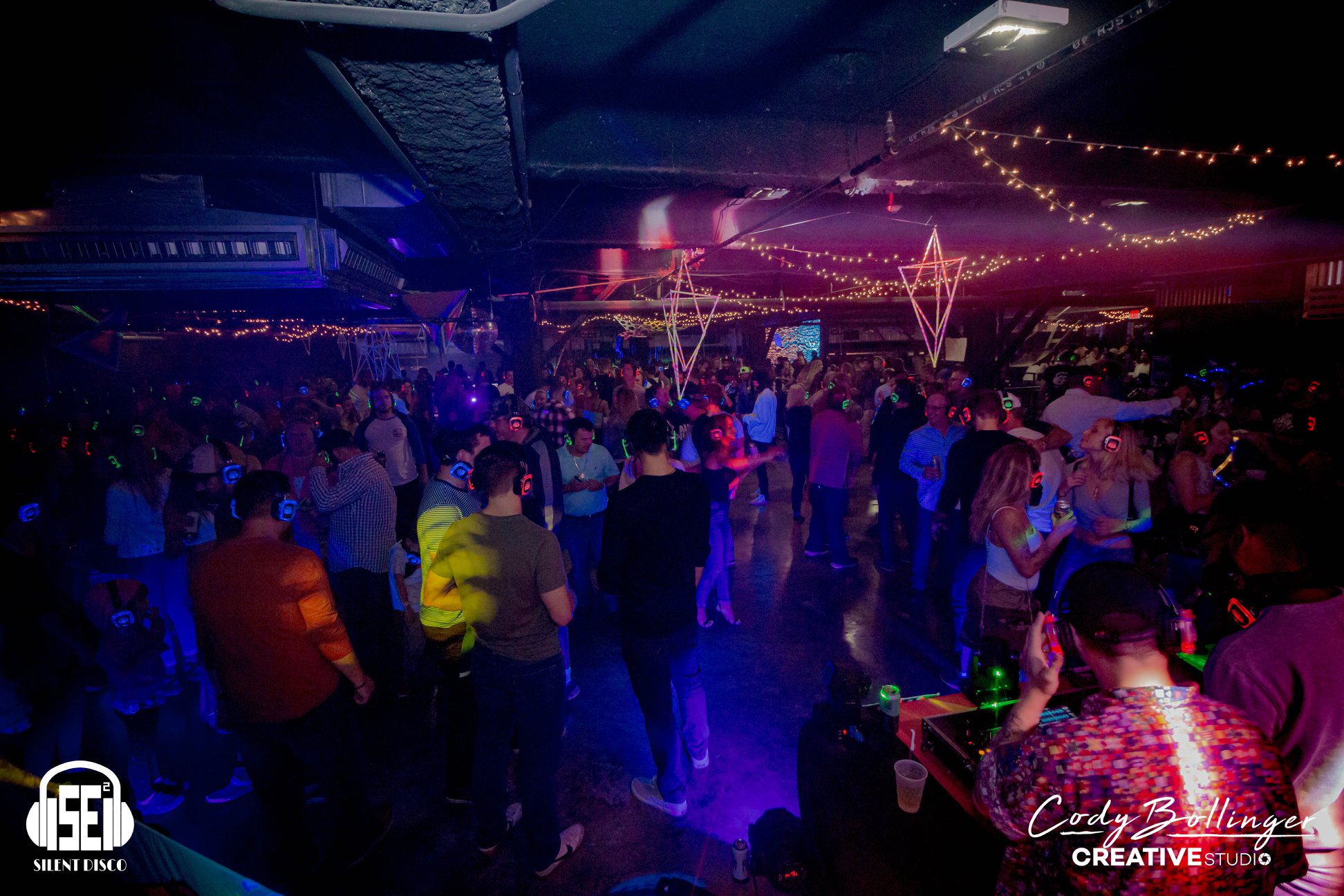
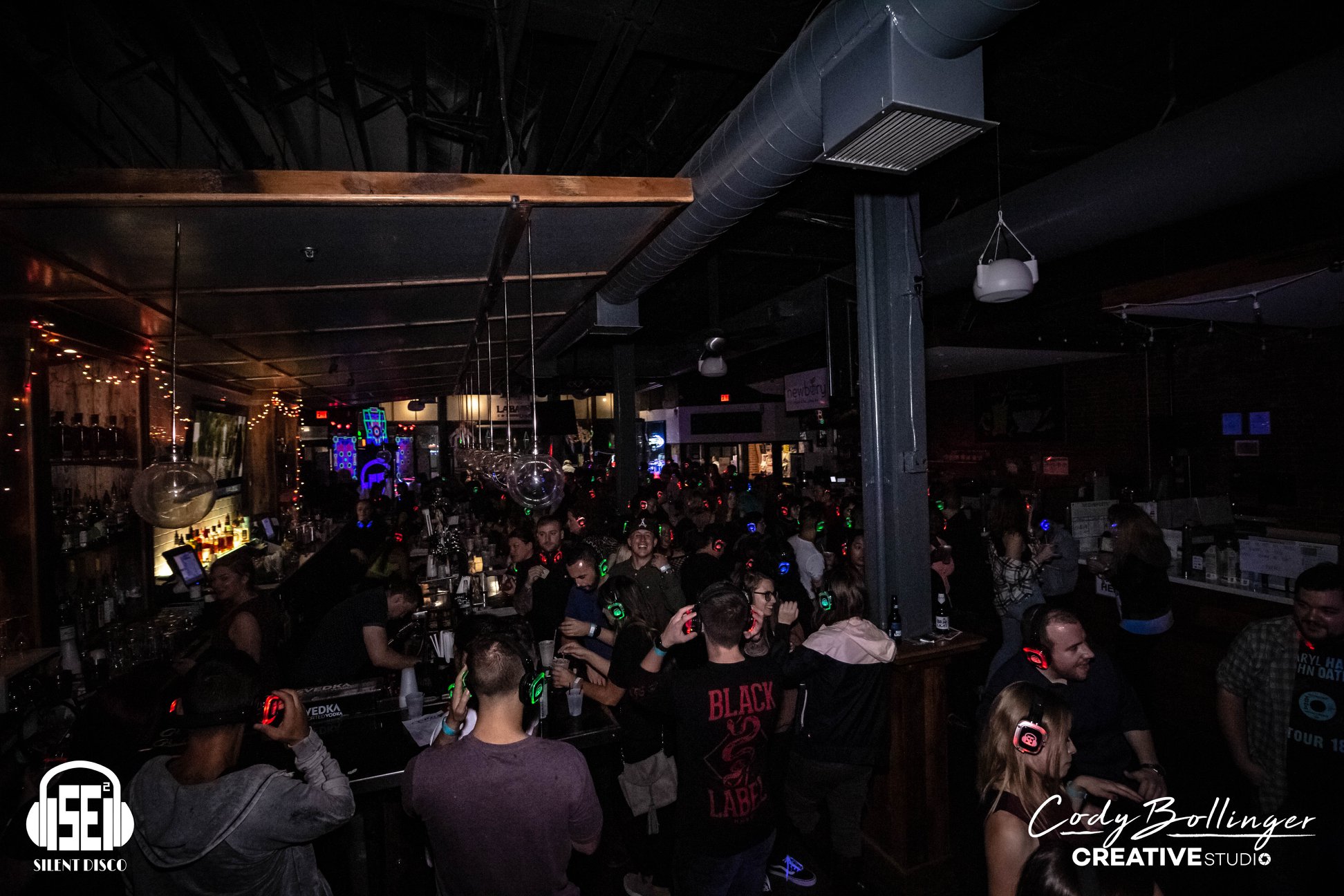
What venues work best for a silent disco? Venues with a defined dance area, manageable power access, safe load-in, and enough room for guests to move comfortably work best. Corporate meeting rooms, hotel ballrooms, event halls, breweries, school gyms, patios, rooftops, and community spaces can all work when their rules support the production.
How much space is needed? The answer depends on whether guests are dancing continuously or moving between tables, activities, and conversation areas. Instead of sizing the entire room as a dance floor, divide the venue into zones:
- Headphone pickup and return
- Dance area
- Seating or conversation area
- DJ and technical position
- Food, bar, registration, or presentation space
- Clear paths for staff and emergency access
Ask the venue about sound restrictions, outside vendors, ceiling height, fog or haze policies, lighting limits, electrical circuits, insurance requirements, and the final end time. Silent does not mean production-free: guests hear the music through headphones, but announcements, crowd movement, staging, and lighting still affect the room.
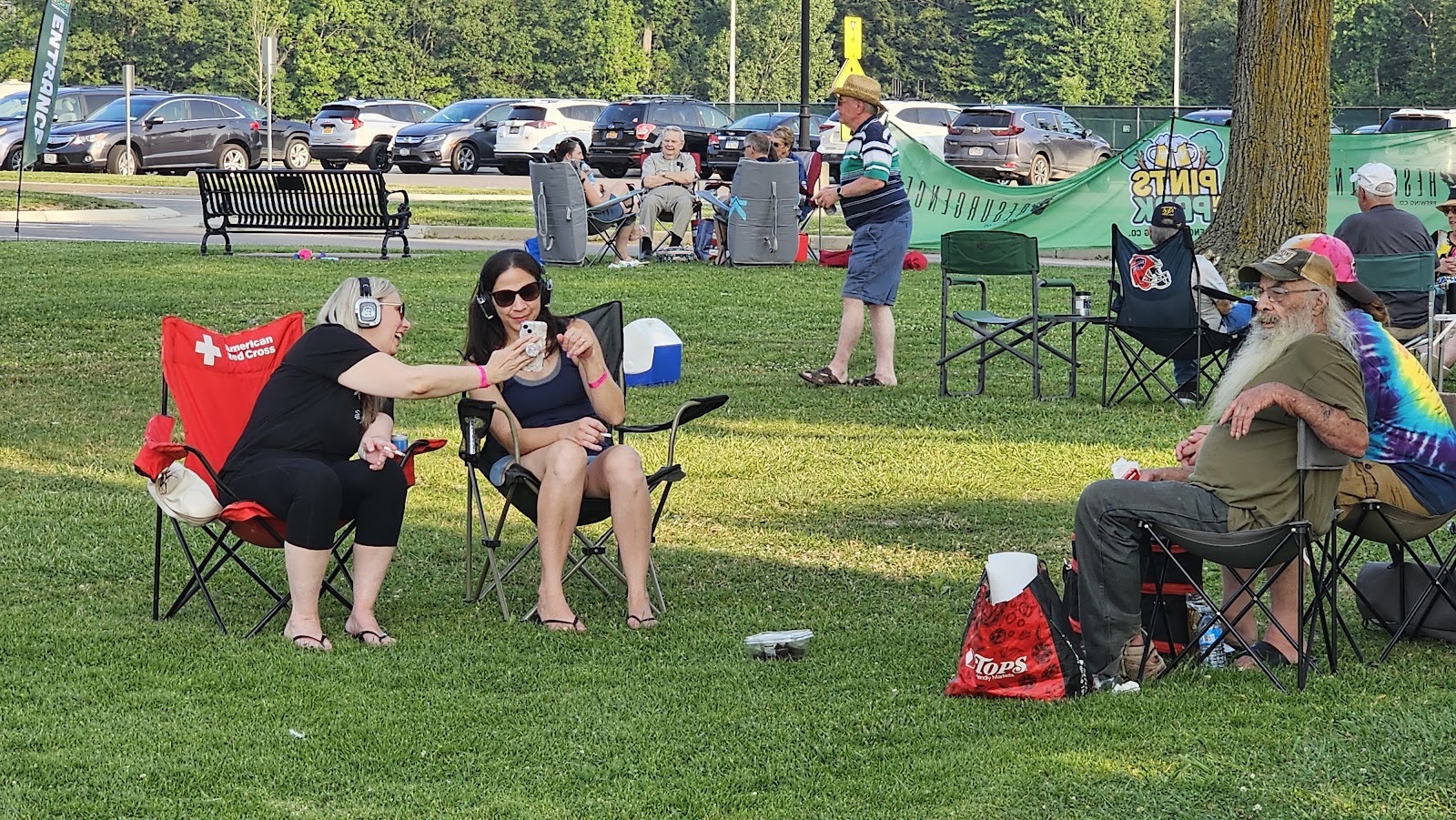
Outdoor events are possible, but weather protection is essential. Headphones, transmitters, mixers, power distribution, and lighting need protection from rain, moisture, extreme temperatures, and unstable ground. Plan a covered technical area, a safe charging and storage location, cable protection, and a weather decision process. Buffalo and Rochester outdoor conditions can change quickly, so a backup indoor area or tent plan is worth confirming early.
6. Decide on lighting and guest flow
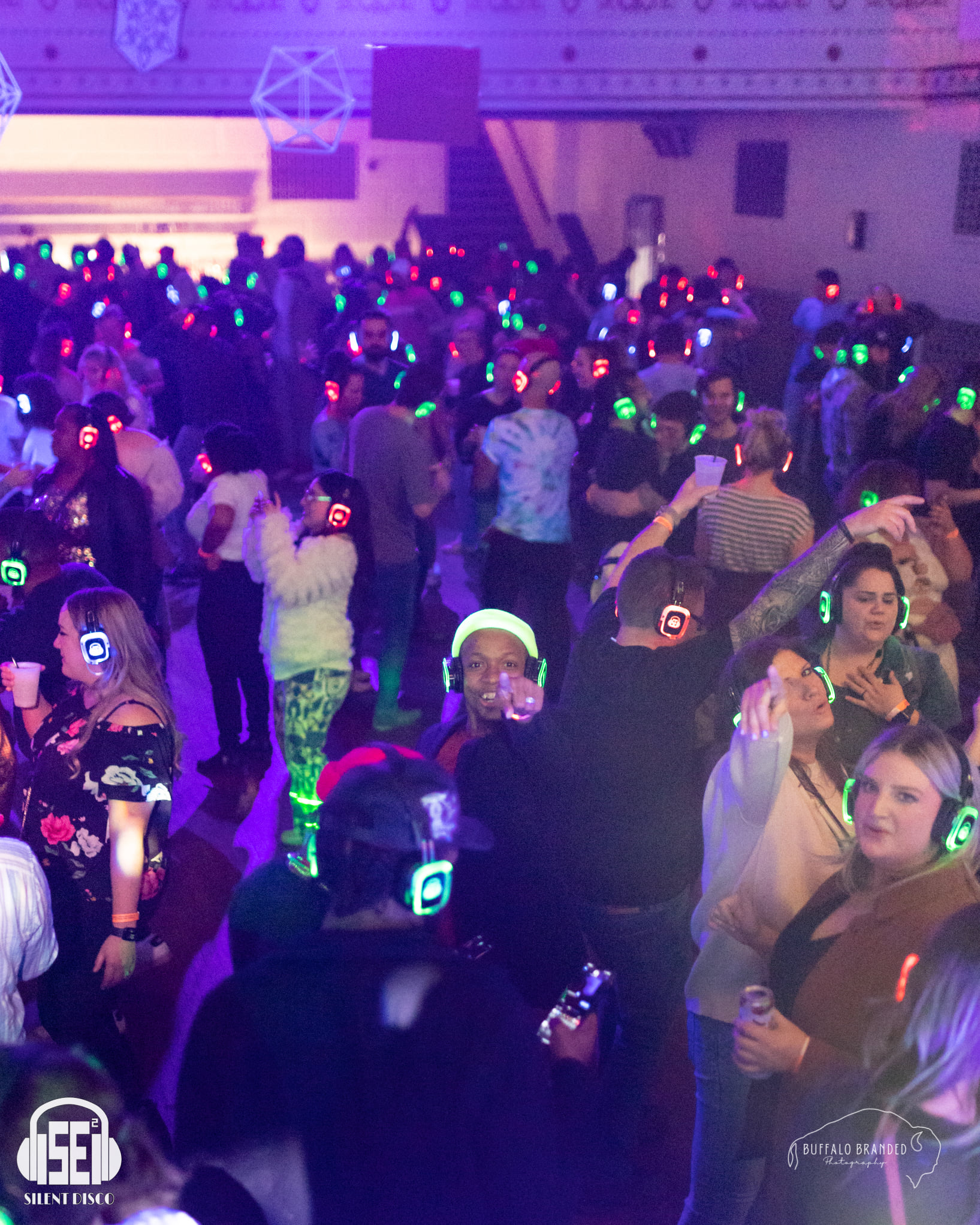
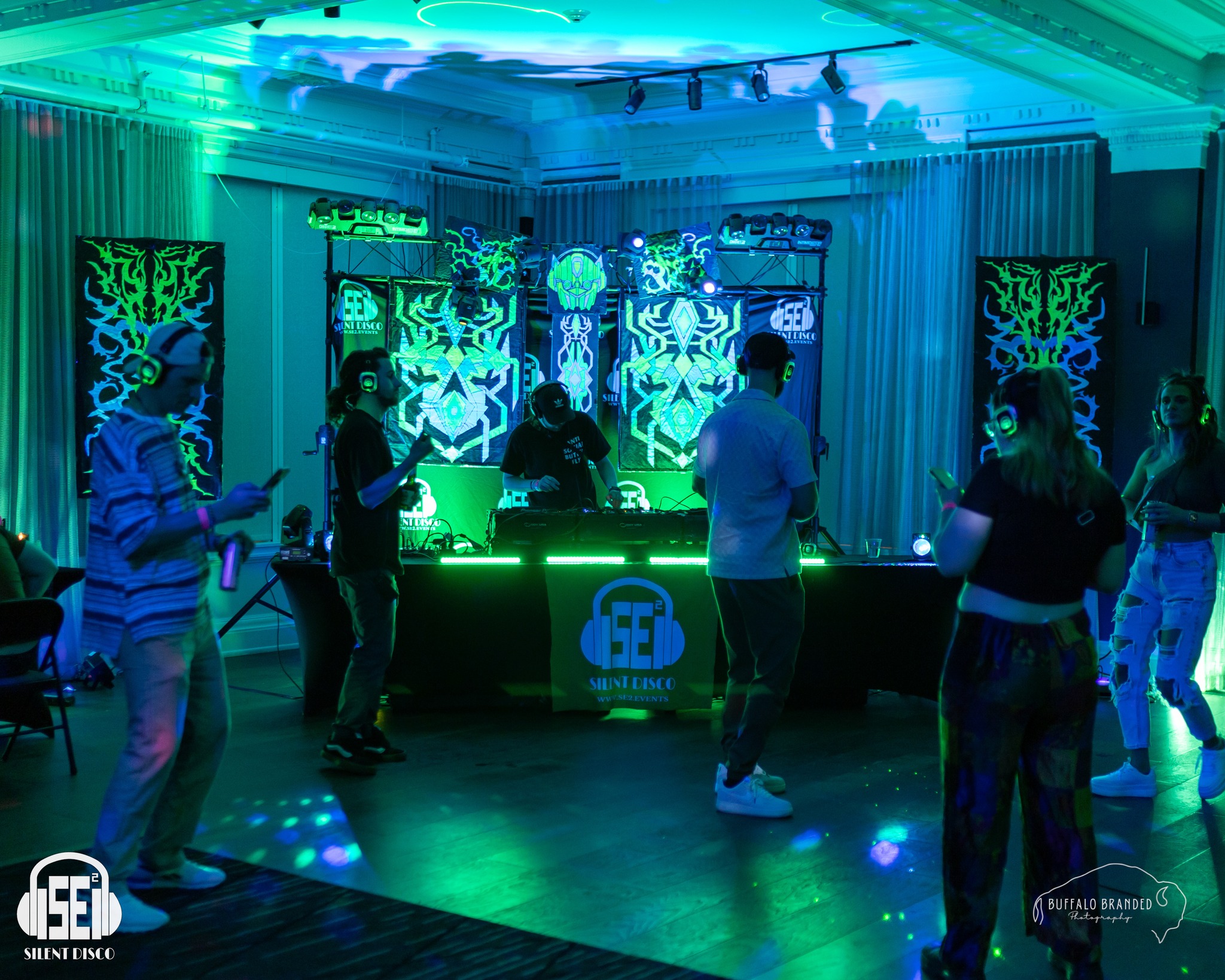
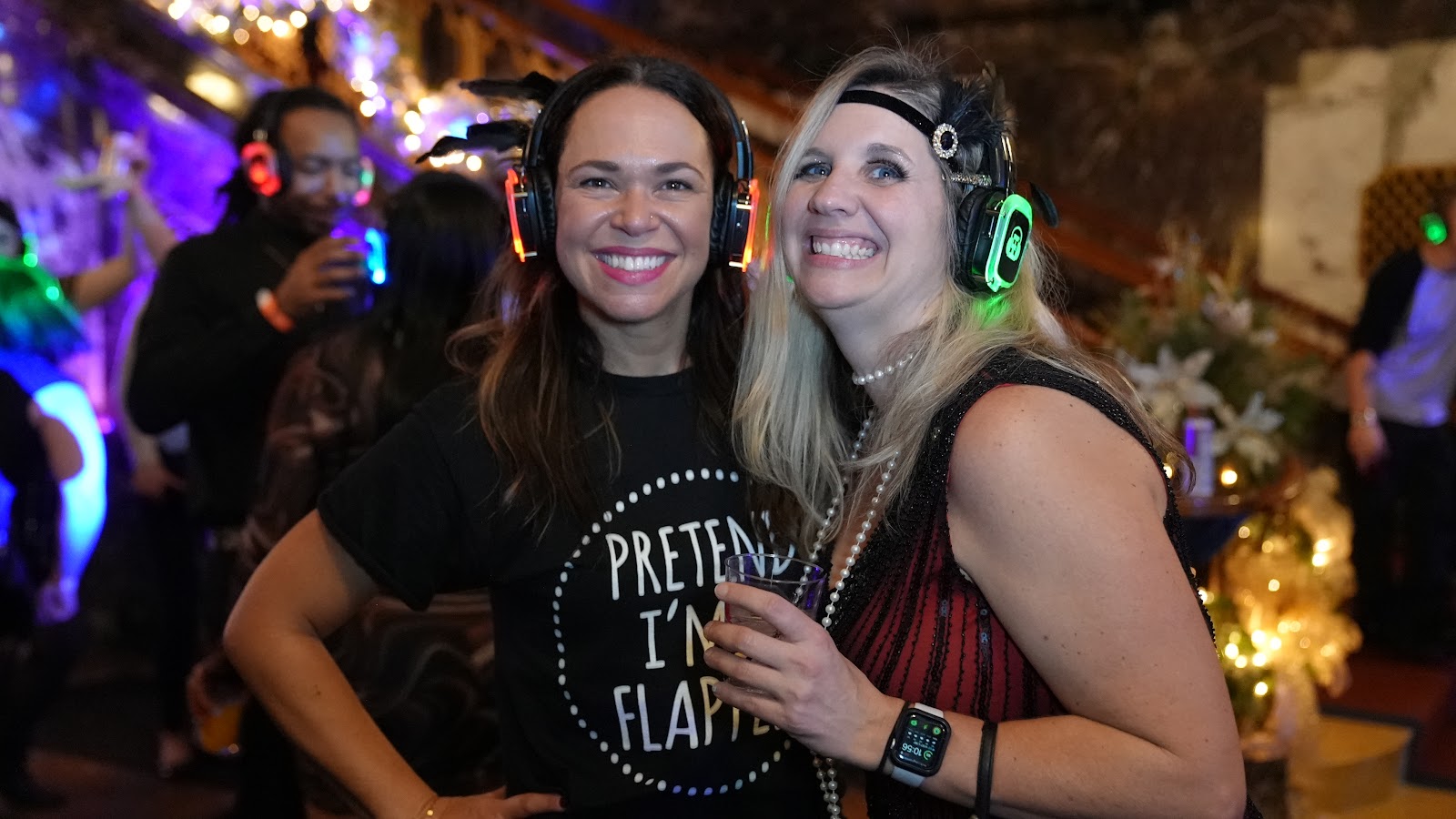
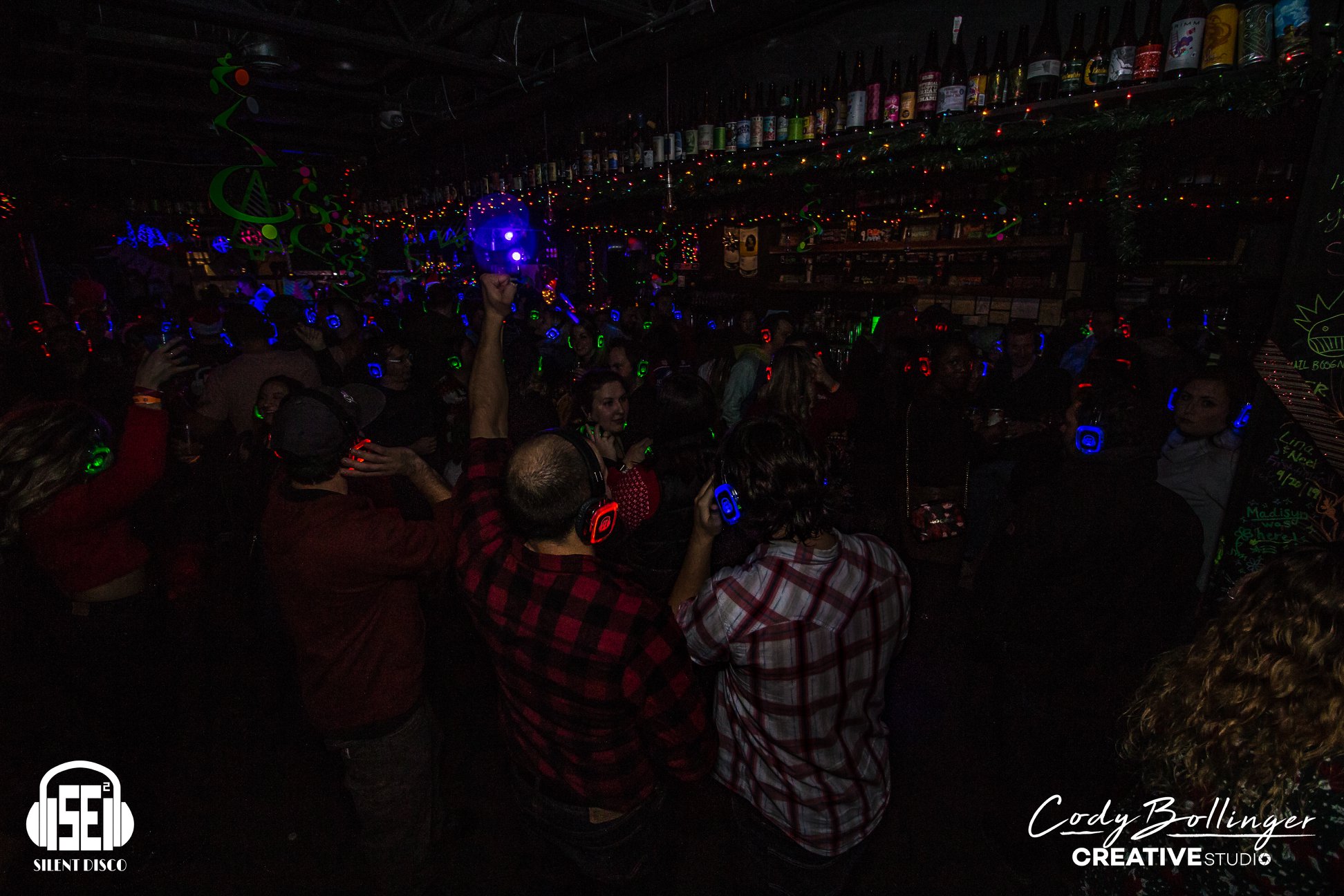
Silent disco lighting helps guests understand where the action is and makes the experience feel intentional rather than like a room full of people wearing headphones. Options may include uplighting, moving lights, lasers where permitted, UV fixtures, haze, or color coordinated with the headphone channels.
Lighting is a tradeoff. A simple setup can keep the focus on music and reduce production complexity. A larger lighting package creates more visual impact but may require additional power, rigging approval, venue clearance, and a trained operator. Never assume a venue allows haze, fog, lasers, or ceiling-mounted fixtures.
Guest flow matters just as much as visual design. Put headphone distribution near the entrance or a clearly marked station, but do not create a bottleneck at registration. Give guests a short explanation of channel colors, volume controls, charging indicators, and return instructions. A staff member should remain available during the first part of the event because guests commonly need help pairing, adjusting, or changing channels.
7. Understand delivery, staffing, and quote factors
How much does a silent disco cost? There is no responsible universal price because the quote depends on the event’s operating requirements. Final pricing can be shaped by guest count, date, venue, travel distance, shipping, staffing, DJ support, lighting, number of channels, event duration, setup and teardown, equipment quantity, and special production needs.
For Buffalo, Rochester, and the wider Western New York region, ask whether the quote includes delivery, pickup, setup, on-site technical support, or only equipment. Shipped rentals may be appropriate for organizations outside the local service area, but the plan should account for transit time, return packaging, charging, inventory checks, and a contingency for delivery issues.
Staffing is another major decision. Self-service rental can work for a small, organized group with a technically confident lead. Staffed service is usually the safer choice for a corporate silent disco, school dance, fundraiser, or public-facing event where guest turnover and troubleshooting are higher. A staffed plan also helps protect the schedule when the venue has strict load-in or teardown windows.
When requesting a quote, send one complete message with the date, city, venue type, guest range, hours, indoor or outdoor plan, channel count, DJ responsibility, lighting needs, delivery preference, and staffing expectations. That gives the provider enough information to recommend the right package instead of guessing from a headphone count alone. You can request a silent disco quote or contact SE2 with those details.
8. Book early and confirm the operating plan
How early should you book silent disco rentals? Book as soon as the date, guest range, and venue are reasonably known, especially for weddings, school calendars, corporate programs, fundraisers, festivals, and dates with tight production schedules. Early planning gives you more choice of headphone inventory, channels, delivery windows, DJs, lighting, and staff.
Before the event, confirm:
- Final headphone quantity and spare policy
- Channel assignments and music sources
- DJ or playlist responsibilities
- Delivery, pickup, shipping, and return instructions
- Venue power, weather, and lighting approvals
- Setup and sound-check timeline
- Guest instructions and headphone return process
- On-site contact for technical decisions
The right silent disco package is not necessarily the largest one. It is the package that matches your peak attendance, venue constraints, music goals, and team capacity. For a Buffalo or Rochester host comparing options, a clear operating plan is the fastest way to get an accurate quote and a smoother event.
Plan your silent disco
- silent disco rentals
- silent disco packages
- custom silent disco events
- request a silent disco quote
- Buffalo silent disco events
- Upcoming silent disco events
Frequently asked questions
What equipment do you need to host a silent disco?
You typically need wireless LED headphones, transmitters, charging equipment, audio sources, and the cables or mixer needed to feed each channel. Depending on the event, you may also need DJs, microphones, speakers for announcements, lighting, haze, tables, signage, and on-site staff.
How many silent disco headphones should you rent?
Base the rental on the maximum realistic number of simultaneous participants, then ask about a reserve for replacements and late arrivals. A dance-focused event generally needs more inventory flexibility than a seated program with optional headphone use.
Do you need a DJ to host a silent disco?
No. You can use DJs, playlists, live performers, or another audio source. However, someone must manage the channels, audio levels, timing, and troubleshooting. SE2 can support the event with silent disco DJ support when your team does not want to manage the technical side.
How many music channels can a silent disco support?
Many silent disco systems support three channels, while the exact number depends on the transmitter system and production setup. More channels offer more choice but require additional audio sources, programming, monitoring, and guest instructions.
What venues work best for a silent disco?
Ballrooms, meeting rooms, event halls, breweries, school gyms, patios, rooftops, and community spaces can work well if they provide safe movement space, power, load-in access, and approval for any lighting, haze, lasers, or outdoor equipment.
How much space is needed for a silent disco?
Space depends on attendance and whether guests dance continuously or move between activities. Plan separate zones for headphone pickup, dancing, seating, food or registration, technical equipment, and clear staff and emergency access.
Can a silent disco be held outdoors?
Yes, but the technical area and equipment need protection from rain, moisture, temperature changes, and unstable power. Confirm a covered setup, cable protection, a weather plan, and a backup location before booking.
How early should you book silent disco rentals?
Book once the date, venue, and approximate guest count are known. Earlier booking is especially helpful for weddings, school events, corporate programs, fundraisers, festivals, and events requiring multiple channels, DJs, lighting, delivery, or staffing.