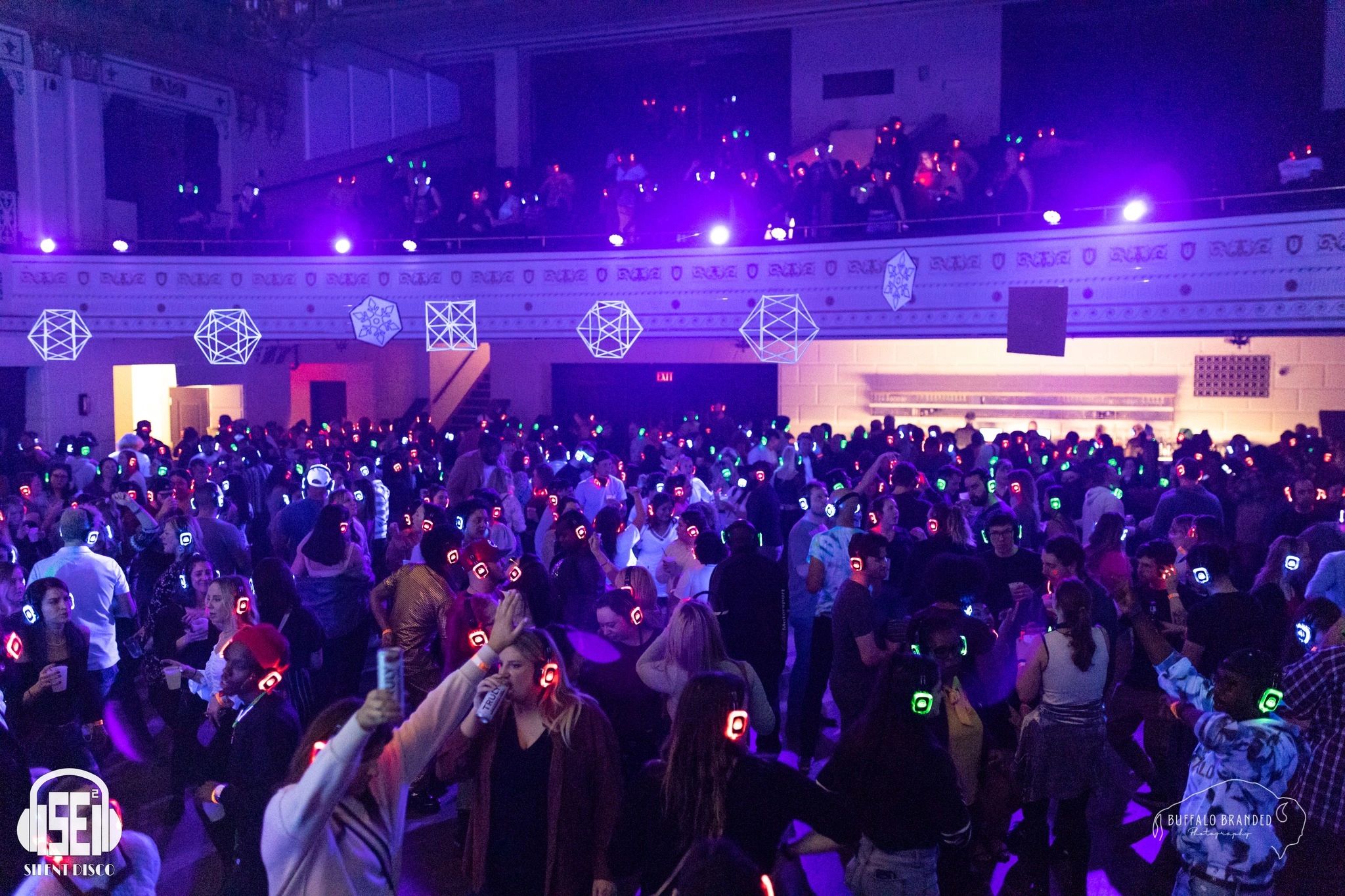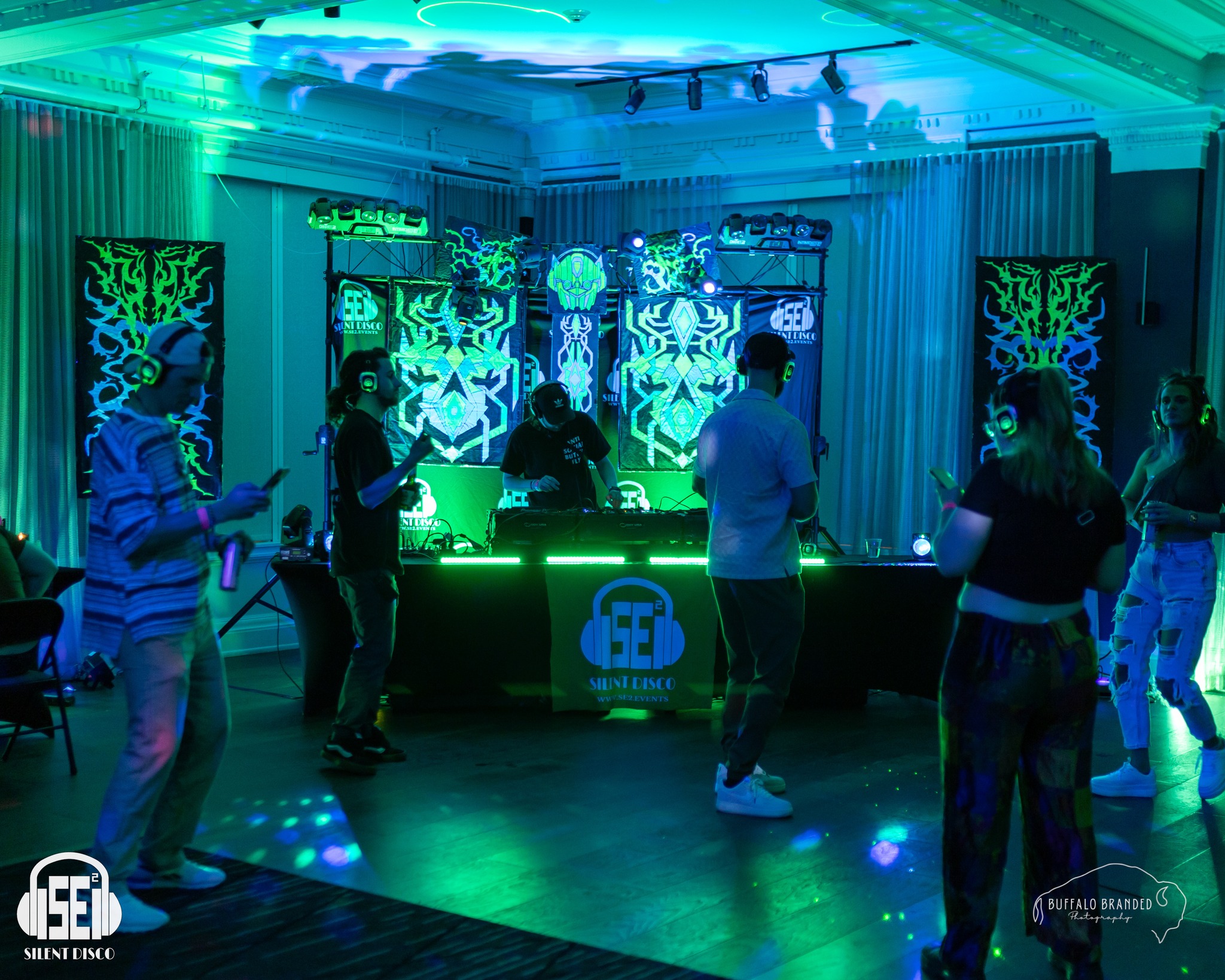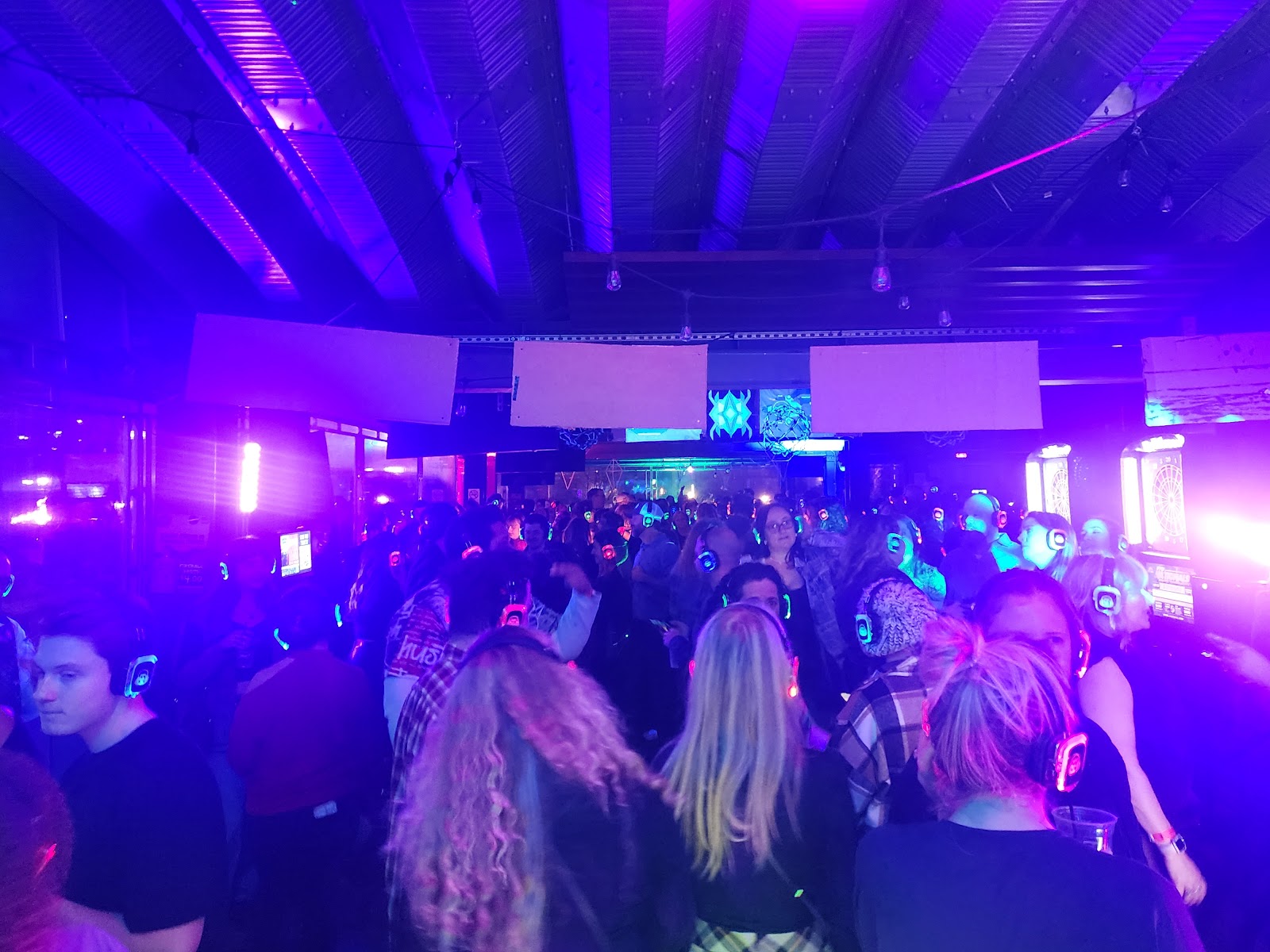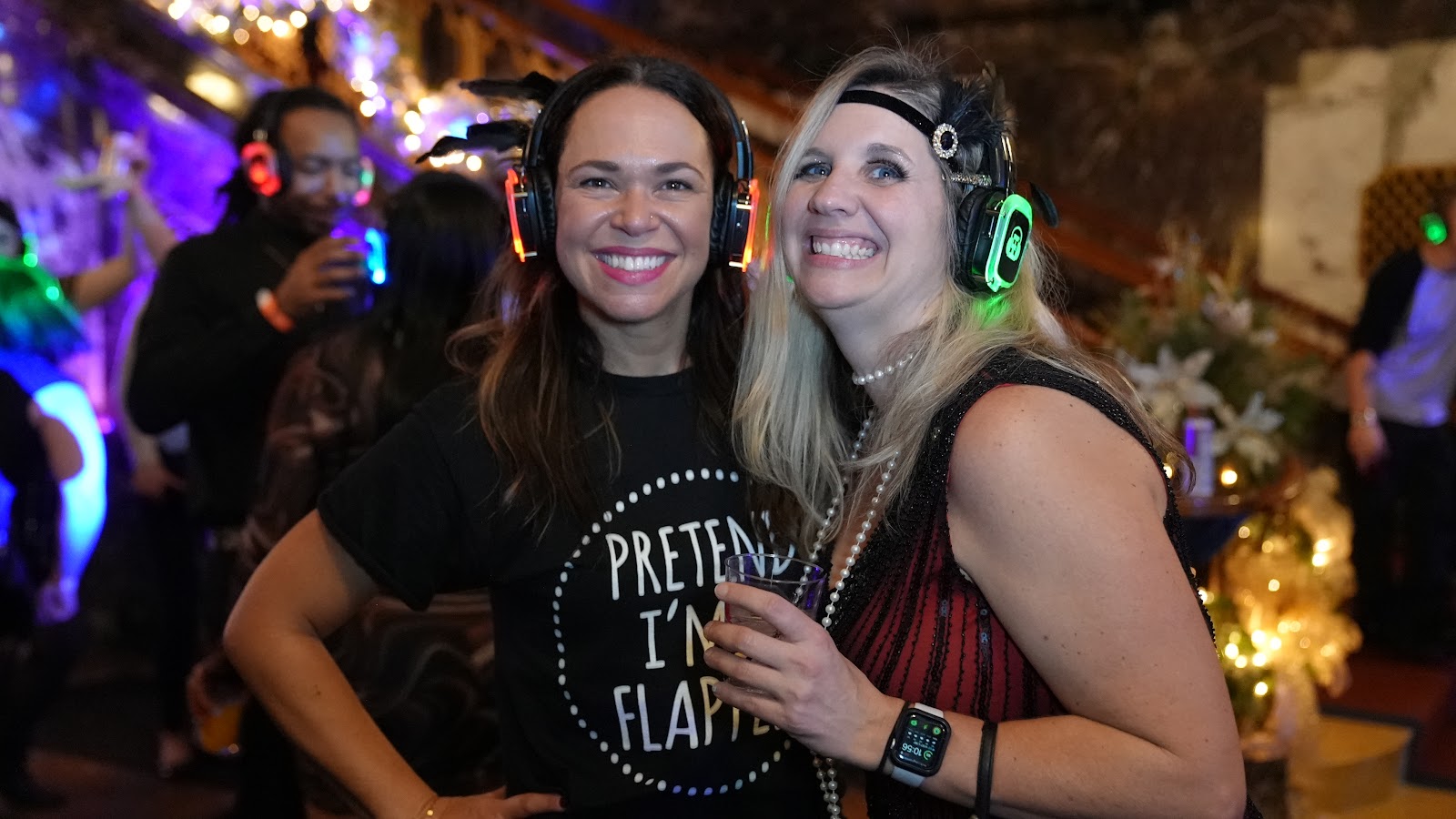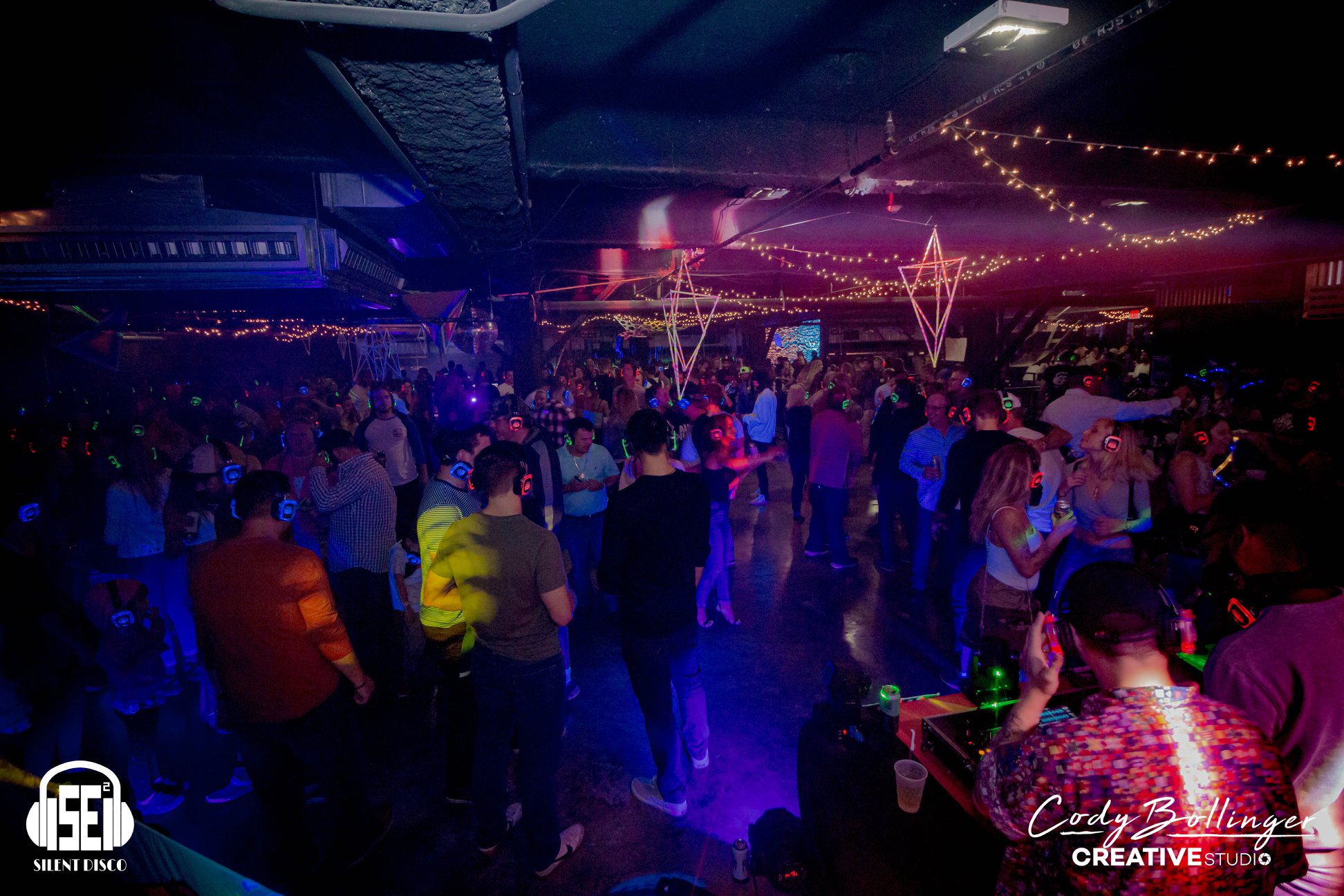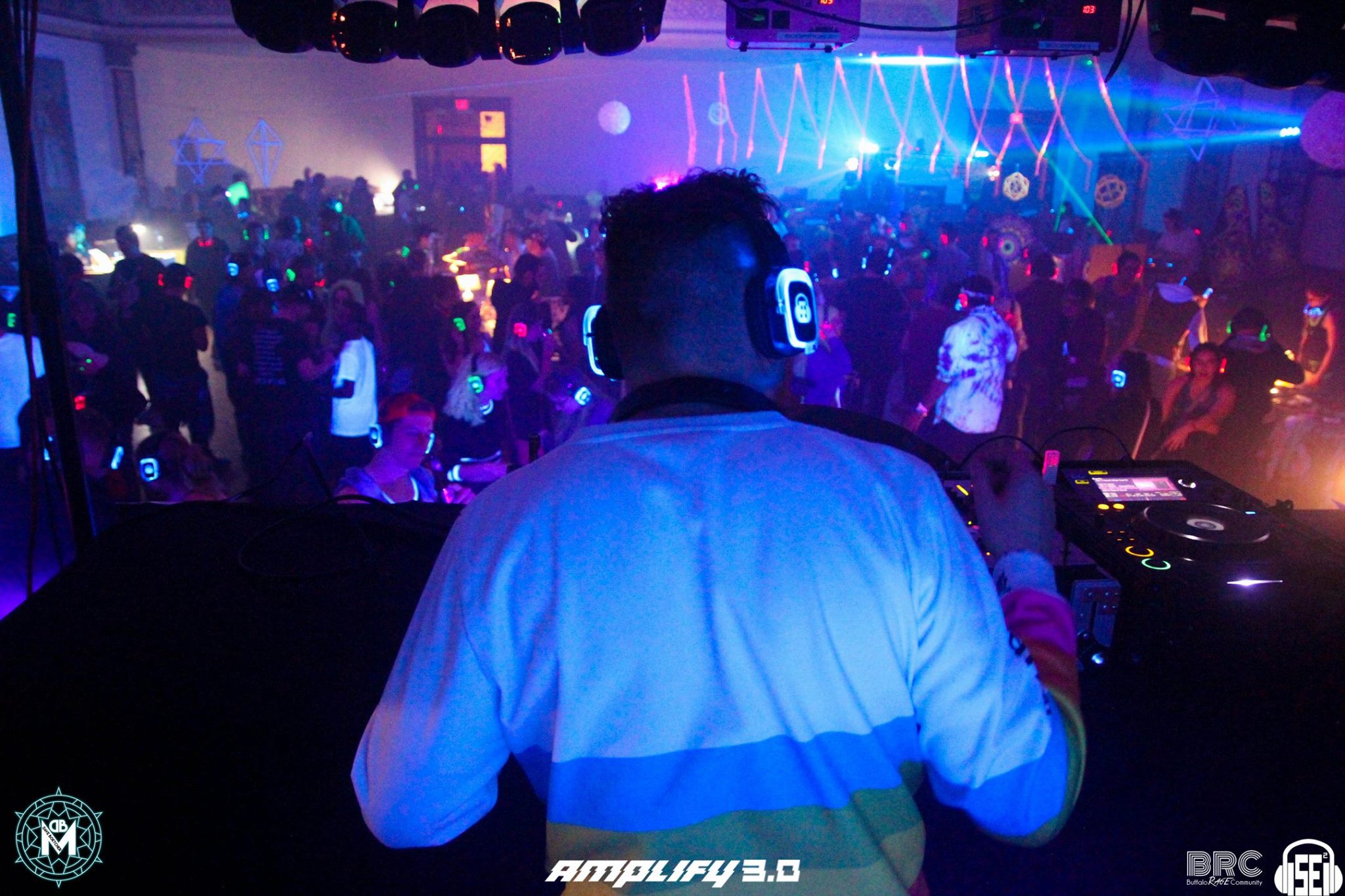
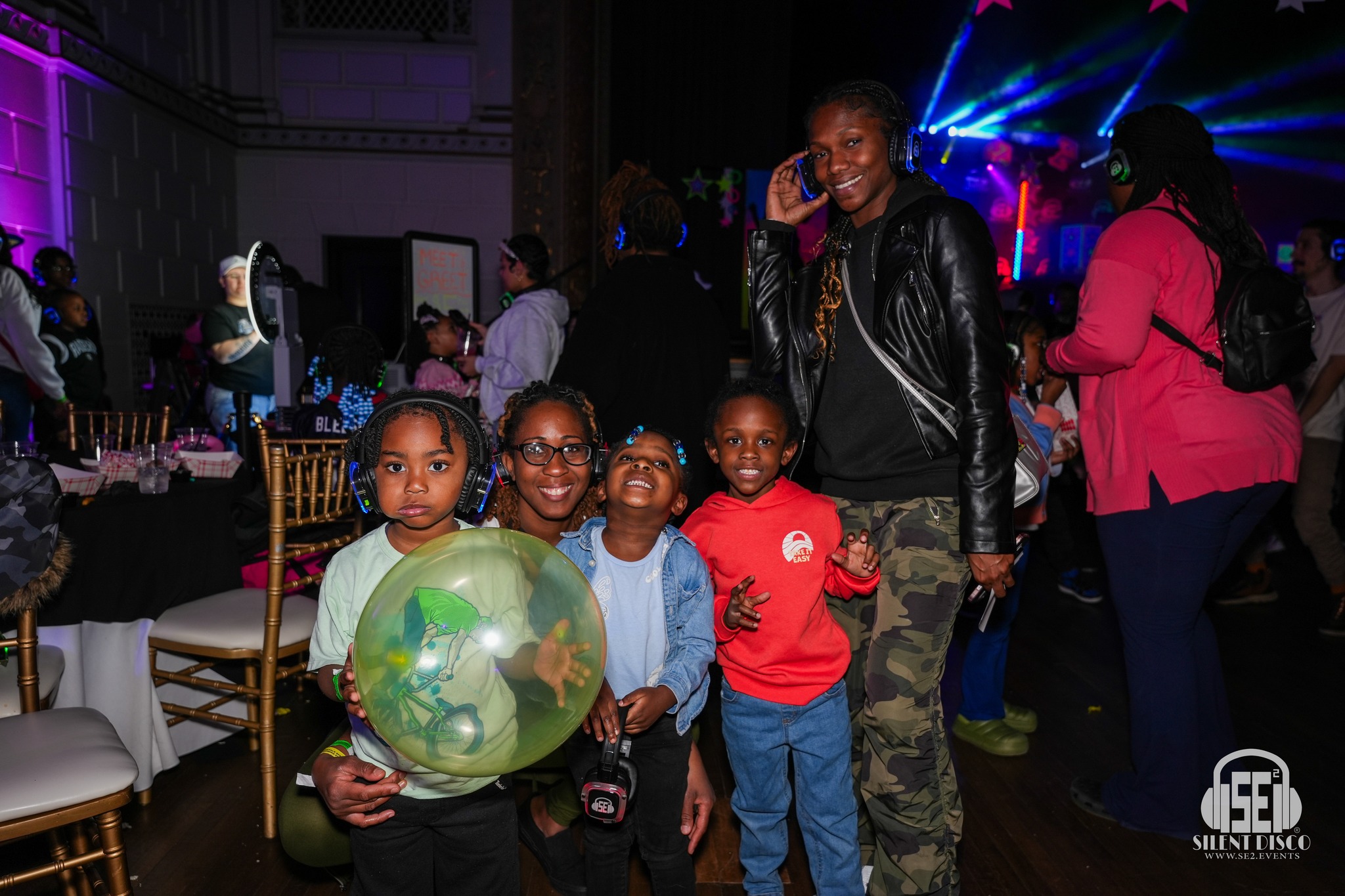
Three headphone channels can make an all-ages silent disco feel like it was built for every person on the floor, or they can leave the kids bored and the grown-ups tuned out. The difference is almost always the music plan. This guide walks through how to set up family fun silent disco channels so younger kids, older kids and parents each have a reason to stay on the dance floor, using the same three-channel approach SE2 runs at its Family Fun events in Buffalo and Rochester.
If you are new to the format, start with how a silent disco works. In short, every guest wears wireless headphones, each transmitter sends one music channel, and a light on each headset shows which channel that guest is hearing. Kids can switch channels with one button whenever they like, and parents can see at a glance which channel each child is on by the color of the light.
Why three channels work for all ages
A single speaker forces one playlist on a room of four-year-olds, ten-year-olds and their parents. Headphones remove that problem. With three channels, each age group gets its own lane, and families can still dance side by side.
A real example: the HALLOWEEN Family Fun Silent Disco @ Buffalo RiverWorks! (ALL AGES) - 10/12 lists these three channels on its ticket page:
- Red: Kids Favorites
- Blue: 90s & 2000s Hits
- Green: Dance Party Anthems
That split covers the youngest guests, the parents who grew up on 90s and 2000s radio, and an upbeat middle channel that older kids and adults both enjoy. You can copy the same structure for a school, church or community event.
Channel 1: kids favorites
This is the channel that makes or breaks the day for younger kids. Build it around songs they already know and can move to without instructions.
- Movie and TV soundtrack songs kids sing along to
- Movement songs with built-in actions, like freeze dances, clap-along songs and line dances
- A few seasonal picks in October, such as friendly Halloween songs about monsters and pumpkins rather than scary ones
- Short tracks, ideally under four minutes, so attention does not drift
Keep the energy steady instead of building to a loud peak. Little dancers tire quickly, so mix in one slower sing-along every few songs to give them a breather.
Channel 2: songs parents know
Parents are more likely to dance, and to stay, when they hear their own music. A 90s and 2000s channel works well because it is familiar to most parents of school-age kids and still sounds fun to teens. Pick upbeat, widely known tracks and skip anything with lyrics you would not want a child to repeat.
A good test: if a parent would turn the car radio down when that song came on with kids in the back seat, leave it off this channel.
Channel 3: the shared middle channel
The third channel is where whole families end up together. Think current clean pop, well-known dance songs, and group moves everyone can follow, like the Cha Cha Slide or the Cupid Shuffle. This is also the channel to use for a costume parade or a group freeze game, because kids and adults are already tuned in.
Some hosts run a live DJ or a host with a microphone on this channel for announcements, contests and countdowns. Guests on the other channels can switch over when they hear about it from friends. Plan two or three of these shared moments, spaced out, so kids have something to look forward to.
Clean edits and volume checks
For any all-ages event, use clean edits only and listen to every track before the day. Radio edits can still include words parents would not want, so do a full listen rather than trusting the label.
Volume matters just as much as song choice. Each headset has its own volume knob, so ask whoever hands out headphones at check-in to set kids' headsets low first. Parents can raise them a little once the music starts. Remind kids they can lift one ear cup to hear a grown-up at any time.
Planning your own family silent disco
You can run this three-channel plan at a school fall event, a library or community center, a church family night, or a backyard birthday. A few planning notes:
- Count headphones for kids and adults. Everyone who will dance needs a headset. SE2 rents headphones in groups of 25, with one transmitter per channel.
- Pick a time that fits young kids. Many family events run in the early afternoon, when kids have the most energy and nap schedules are not a concern.
- Set up a quiet corner. A spot with a few chairs, water and no headphones helps kids who need a break.
- Label the channels on a sign. Kids learn colors faster than names, so post "Red = Kids Favorites" near check-in.
See silent disco rentals and silent disco packages for options, or look at our pages on school silent disco events and church and community events. When you are ready, request a quote and tell us the ages you expect so we can suggest a channel plan.
Find a family fun silent disco near you
SE2 runs public Family Fun silent discos in Western New York, often in the early afternoon on school breaks, and private family events across Buffalo and Rochester. Check the SE2 events calendar for upcoming all-ages dates.
Plan your silent disco
- Request a quote
- Silent disco rentals
- Silent disco packages
- School silent disco events
- Church and community events
- SE2 events calendar
- Private party silent disco packages
Frequently asked questions
How many channels does a family silent disco need?
Three works well for all ages: one kids favorites channel, one channel of songs parents know, and one shared channel the whole family can dance to together. Each channel needs its own transmitter.
What songs should go on a kids silent disco channel?
Songs kids already know and can move to: movie and TV sing-alongs, freeze and clap-along songs, and simple line dances. Keep tracks short and add a slower sing-along every few songs so younger kids can rest.
How do I keep silent disco music clean for kids?
Use clean edits only and listen to every track all the way through before the event. Radio edits can still include words parents would not want, so a full listen is the safest check.
Can kids switch silent disco channels on their own?
Yes. Each headset has a channel button and a colored light, so kids can change channels with one press. A sign near check-in that matches each color to a channel name helps younger kids.
Should parents and kids hear the same music?
Not always. Separate channels let kids and parents each enjoy their own music, and a shared middle channel brings families together for group dances and the costume parade.