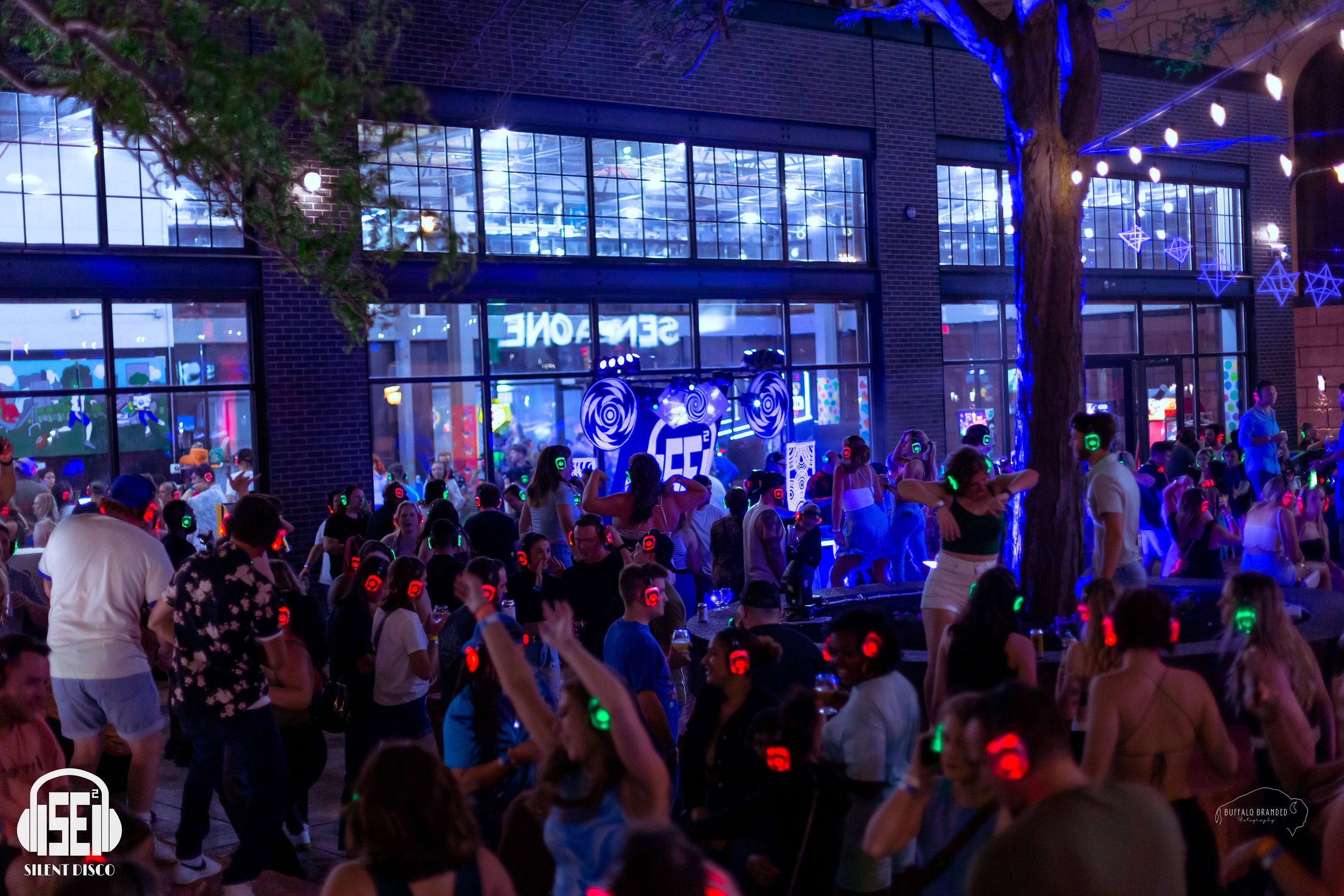
Seven useful features—not seven guarantees
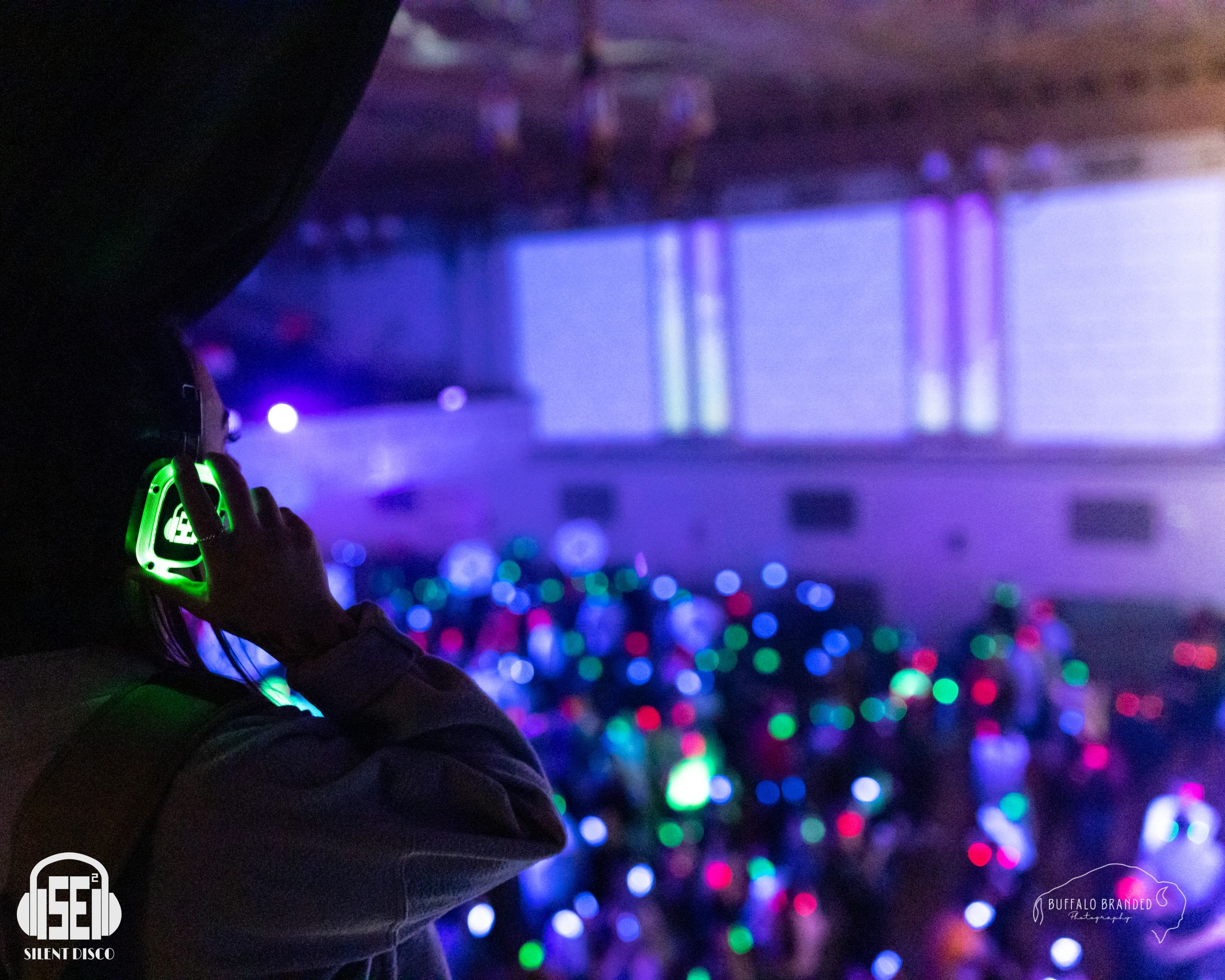
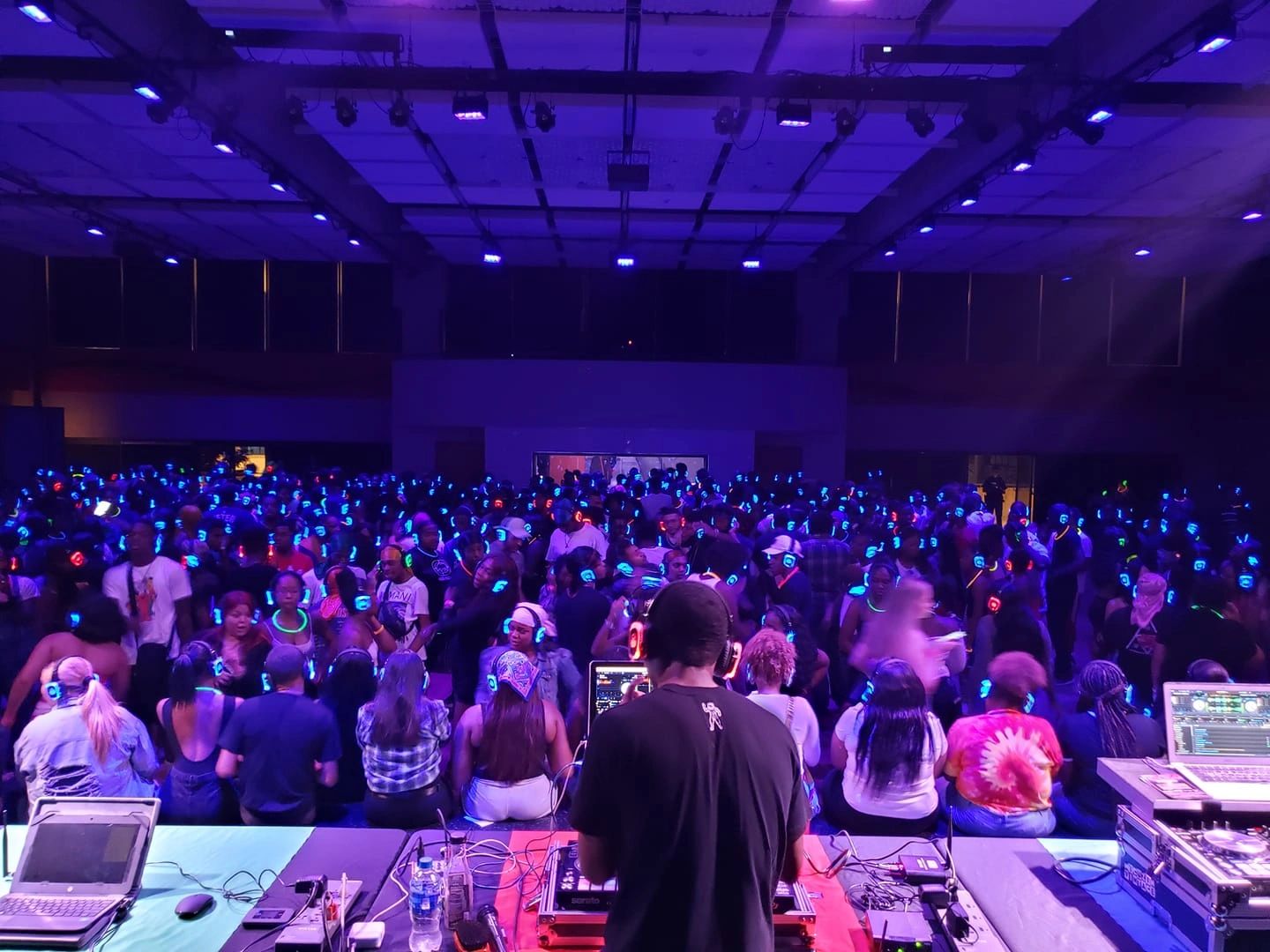
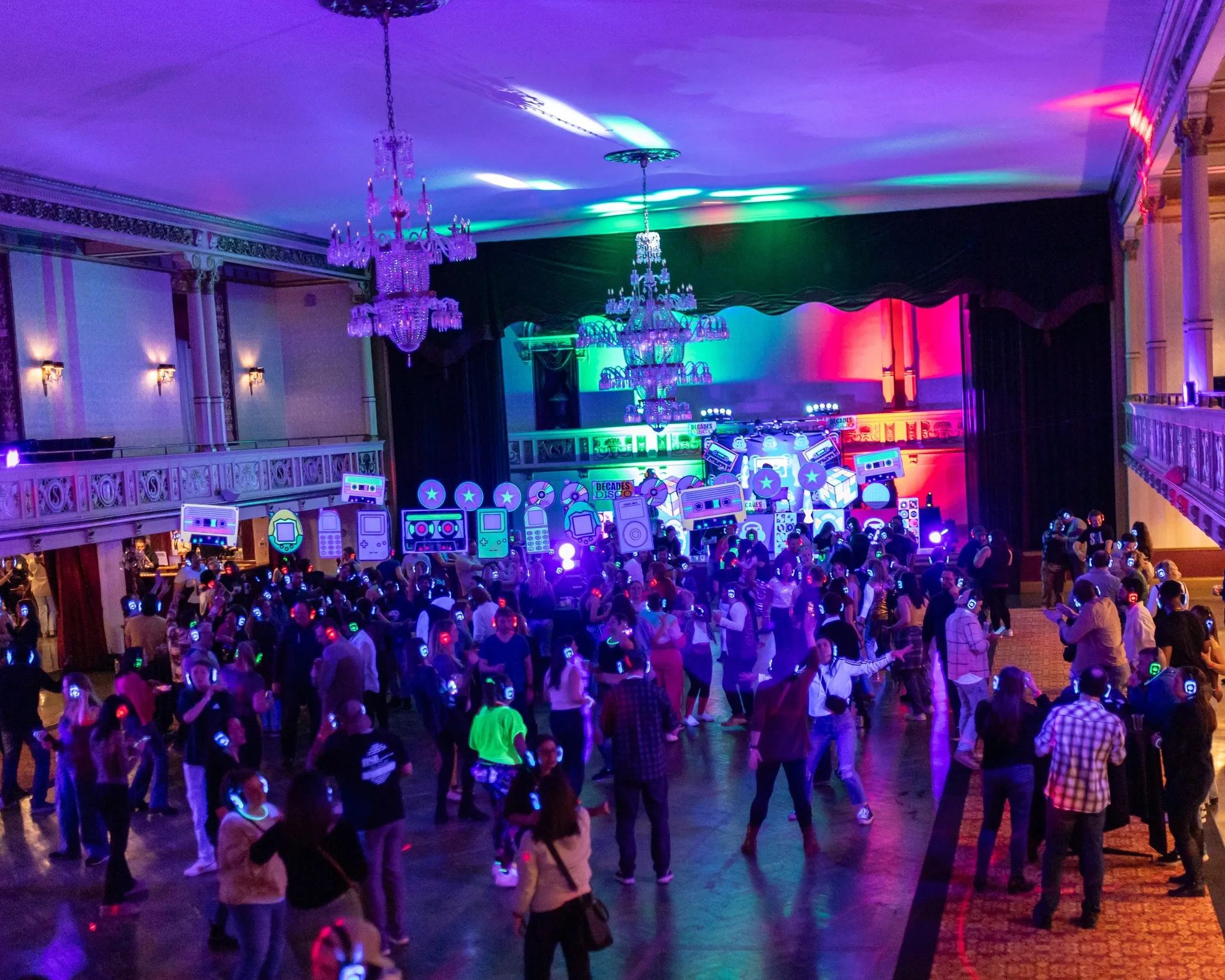
A silent disco changes how guests receive the music: through headphones rather than a room-wide music system. Whether that is a better fit depends on the venue, audience, and event schedule. Here are seven concrete reasons to consider it.
- Music choice: separate channels let people choose between different audio feeds without leaving the same gathering.
- Personal volume control: guests can adjust their own headphones rather than sharing one room-wide music level.
- Conversation breaks: taking the headphones off makes it easier to step out of the music. Crowd voices and other venue sound remain.
- Mixed-age programming: organizers can plan distinct styles instead of making every playlist serve every guest.
- Flexible participation: some guests can dance while others watch or socialize. Participation should be optional.
- Less amplified music in the surrounding space: headphone delivery can help where speaker sound is a concern. It does not remove crowd noise, venue restrictions, or the need for permission.
- A reusable event format: the same basic audio approach can support a dance party or a planned listening session when the equipment and staffing fit the use.
Check the tradeoffs before booking
Someone still needs to distribute, explain, collect, and account for the headphones. Music sources need testing. Guests may have accessibility needs or simply prefer not to wear a headset, so ask about alternatives instead of assuming the format suits everyone.
A traditional speaker-based setup may be more appropriate when one shared soundtrack and announcements are central to the event. A headphone setup may fit when channel choice matters. Neither choice automatically makes an event successful.
Start with your guest count, venue permission, event hours, and who will operate the music. Our how-it-works guide explains the guest experience; rentals and packages describe the two planning routes.